Future Innovations in Ink Production Machine Design
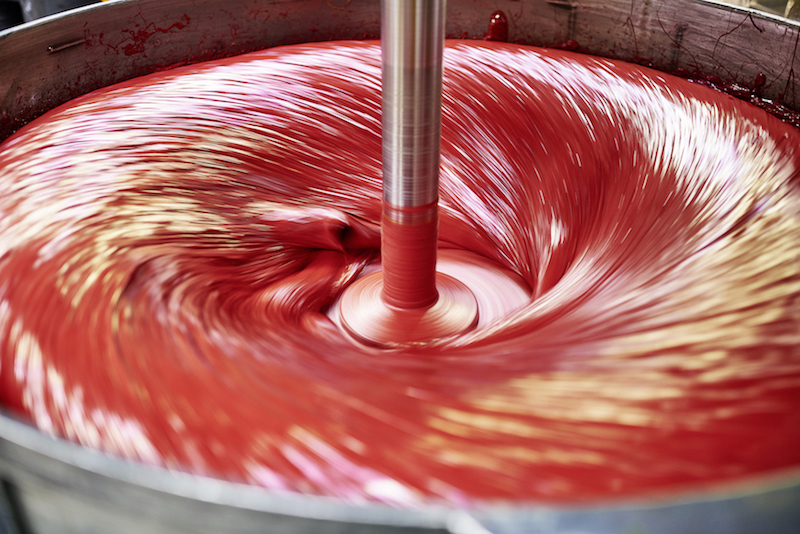
Ink manufacturing is rapidly evolving as industries demand faster production, higher precision, and more sustainable processes. Traditional systems are being replaced with intelligent, automated solutions that integrate advanced control systems, smart materials, and data-driven optimization. These changes are reshaping how ink is formulated, processed, and delivered at an industrial scale.
Modern Ink Production Machine technology is at the center of this transformation. A system such as the Ink Production Machine is increasingly designed not just for mechanical processing, but for smart manufacturing that improves efficiency, consistency, and environmental performance.
Table of Contents
ToggleRise of AI-Driven Ink Formulation
One of the most important future innovations is the use of artificial intelligence in ink formulation and process control. AI systems analyze large datasets to optimize pigment ratios, viscosity, and dispersion behavior.
This leads to:
- Faster development of new ink formulations
- Improved batch-to-batch consistency
- Reduced trial-and-error in production
- Better color accuracy and stability
AI is expected to make ink production more predictable and efficient than ever before.
Smart Automation and Self-Adjusting Systems
Future ink production machines will increasingly feature self-adjusting automation systems. Instead of fixed settings, machines will automatically adapt to process conditions in real time.
Key developments include:
- Automatic viscosity and temperature adjustment
- Real-time correction of mixing and grinding parameters
- Adaptive flow control based on material behavior
- Reduced need for manual intervention
These systems improve efficiency while minimizing human error.
Integration of IoT and Real-Time Monitoring
The Internet of Things (IoT) is becoming a core part of modern manufacturing systems. Ink production machines are now being equipped with sensors that continuously collect and transmit data.
This enables:
- Remote monitoring of production lines
- Predictive maintenance alerts
- Real-time performance tracking
- Centralized data management across facilities
As highlighted in industry trends, IoT integration is a key step toward smarter and more connected production environments .
Advanced Dispersion and Nano-Technology Processing
Future ink systems will focus heavily on improving dispersion technology, especially for nano-scale materials. This allows manufacturers to produce inks with enhanced optical, electrical, and functional properties.
Innovations include:
- Nano-pigment processing for higher color intensity
- Improved stability for high-solid formulations
- Better compatibility with complex substrates
- Faster drying and curing performance
These advancements will expand ink applications beyond traditional printing into electronics and functional coatings .
Sustainable and Eco-Friendly Manufacturing
Environmental responsibility is becoming a major driver of innovation in ink production. Future machines will prioritize energy efficiency and reduced environmental impact.
Expected improvements include:
- Lower energy consumption systems
- Water-based and biodegradable ink compatibility
- Reduced solvent emissions
- Closed-loop recycling systems for waste reduction
Sustainability is now a core requirement rather than an optional feature in modern manufacturing design.
Modular and Flexible Machine Architecture
Future ink production machines will also become more modular, allowing manufacturers to adapt systems based on production needs.
Benefits include:
- Easy expansion of production capacity
- Faster equipment upgrades
- Reduced downtime during maintenance
- Flexible configuration for different ink types
This flexibility helps manufacturers respond quickly to changing market demands.
Predictive Maintenance and Digital Twins
Another major innovation is the use of predictive maintenance powered by digital twin technology. Machines will simulate their own performance and predict failures before they occur.
This leads to:
- Reduced unexpected downtime
- Lower maintenance costs
- Improved machine lifespan
- Continuous optimization of production efficiency
Predictive systems make operations more reliable and cost-effective.
Conclusion
The future of ink production machine design is being shaped by automation, artificial intelligence, IoT connectivity, and sustainable engineering. These innovations are transforming traditional manufacturing into a smarter, more efficient, and highly adaptive process.
As technology continues to evolve, Ink Production Machine systems will become more intelligent, environmentally friendly, and capable of delivering unmatched consistency—setting a new standard for industrial ink manufacturing.




Post Comment