Why High Tensile Galvanized Stranded Wire Is Ideal for Heavy-Duty Support Applications
When a structure has to remain secure under constant pulling forces, the materials used in its support system become a critical engineering decision. Utility poles, communication towers, industrial installations, and other exposed structures may face a combination of wind pressure, uneven loading, vibration, and environmental wear. Their support components must therefore do more than simply hold a structure in place. They need to maintain mechanical reliability over extended periods, often in locations where access for repairs is difficult.
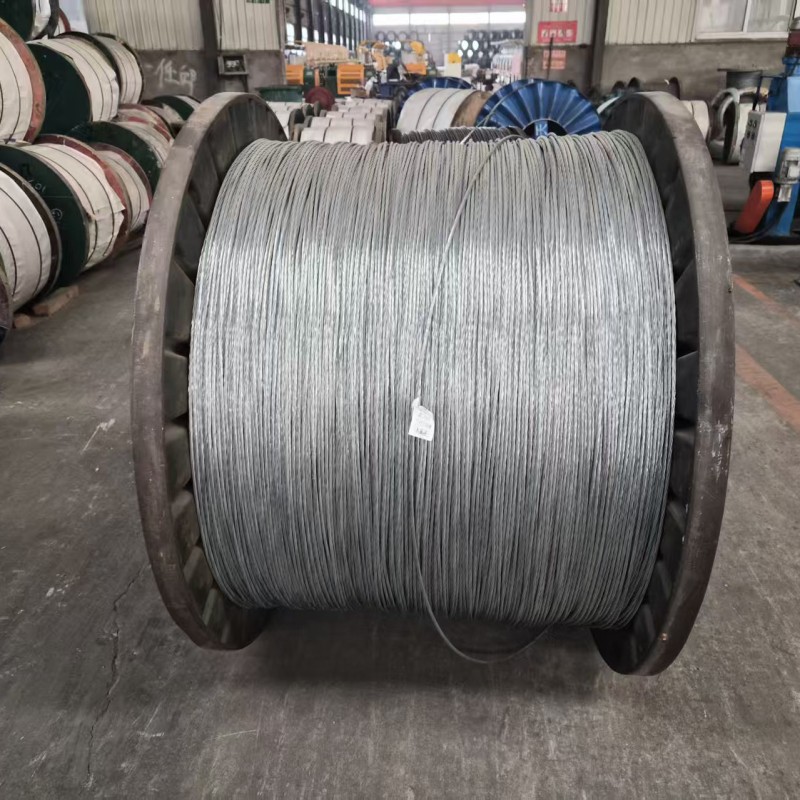
This is where High Tensile Galvanized Stranded Wire offers a useful combination of properties. Made from multiple steel wires formed into a strand and protected by a zinc coating, it is designed for applications that require substantial tensile capacity and resistance to outdoor corrosion. Its value lies not in one feature alone, but in how strength, construction, and surface protection work together.
The Engineering Behind Stranded Wire
Unlike a single solid wire, stranded wire consists of several individual steel wires twisted or laid together in a defined arrangement. This construction creates a flexible assembly that can be handled and installed in practical lengths while providing the strength required for tension-based support systems.
The individual wires share the applied load through the strand. The precise performance depends on the number and diameter of wires, their material properties, the stranding arrangement, and the quality of manufacturing. For demanding projects, these details matter because two products that look similar may have different mechanical ratings.
High tensile steel is selected for its ability to withstand significant pulling forces. This makes the material suitable for guying and bracing systems, where the wire is expected to remain under tension as it resists movement in a supported structure.
Why the High-Tensile Property Matters
Heavy-duty support systems are exposed to forces that can change over time. Wind gusts, conductor tension, equipment weight, and structural movement can all influence the load carried by a supporting strand.
High tensile strength helps the wire resist these forces without premature failure. It also allows engineers to specify a support component based on calculated loads rather than choosing a material simply because it appears substantial.
However, tensile strength should not be considered in isolation. Engineers must also account for working load limits, safety factors, elongation, termination efficiency, and the capacity of connected anchors and fittings. A strong strand cannot compensate for an undersized anchor or an incorrectly designed support arrangement.
Galvanization: A Protective Layer for Challenging Conditions
Steel offers valuable mechanical performance, but untreated steel can corrode when repeatedly exposed to moisture and oxygen. In outdoor installations, rust can gradually reduce the effective cross-section of a wire and compromise its ability to carry tension.
Galvanization helps address this issue by applying a zinc coating to the steel surface. The coating provides a protective barrier and also offers sacrificial protection, meaning zinc can corrode preferentially to the underlying steel when the coating is damaged.
This is particularly relevant in applications where support wires remain outdoors throughout the year. Rainfall, humidity, temperature fluctuations, and airborne contaminants can all affect service life. The actual level of protection depends on coating thickness, coating quality, manufacturing consistency, and local exposure conditions.
For installations in coastal or highly corrosive environments, project specifications may require additional attention to coating requirements and inspection intervals.
Where Heavy-Duty Stranded Wire Is Used
The material’s combination of tensile capacity and corrosion protection makes it relevant to several types of support work.
Utility Poles and Overhead Power Networks
Distribution poles can experience unbalanced forces at line ends, corners, and locations where conductor arrangements change. Guy wires help counter these forces by transferring tension to appropriately designed ground anchors. High tensile galvanized strands are suitable for such applications when their mechanical ratings match the network design.
Communication Towers and Antenna Structures
Certain tower and mast designs use tensioned guy assemblies to maintain stability. These systems must account for wind loading, structural geometry, anchor placement, and the expected movement of the supporting structure. Galvanized stranded wire can provide a durable tension member when specified for the relevant conditions.
Industrial Support Structures
Factories, processing facilities, and outdoor installations may require bracing or tension-based support arrangements. Stranded steel wire can be considered where the design calls for a strong, durable tensile component. Its suitability depends on the load case, attachment method, and applicable engineering standards.
Construction and Temporary Stabilization
Some construction projects use tensioned support systems to help stabilize temporary structures or equipment. In these situations, the strand must be selected for the intended duration, loading conditions, and site hazards. Temporary use does not remove the need for proper design and inspection.
Factors That Should Guide Product Selection
Choosing a strand for a heavy-duty application requires a closer look at its technical specifications. The following considerations can help procurement teams and engineers avoid mismatches.
| Selection factor | Why it matters |
|---|---|
| Nominal diameter | Determines dimensional compatibility and contributes to load capacity. |
| Strand construction | Influences flexibility, handling, and mechanical characteristics. |
| Tensile strength | Indicates the material’s resistance to pulling forces. |
| Zinc coating | Helps protect the steel against corrosion. |
| Elongation properties | Helps engineers assess how the strand behaves under load. |
| Manufacturing standards | Supports consistent quality and verification of performance. |
| End fittings | Must transfer the applied force safely without damaging the strand. |
Buyers should request technical data sheets and relevant test information rather than relying on a product description alone. Where a project specifies a particular standard, compliance should be confirmed through appropriate documentation.
Installation: The Strength of the System Depends on Every Connection
A stranded wire assembly works as part of a larger mechanical system. Its performance depends on how loads move through the wire, fittings, anchors, and supported structure.
Before installation, the supporting design should establish the correct anchor position, wire alignment, and required tension. Fittings must be compatible with the strand’s diameter and construction. Incorrectly sized grips or poorly formed terminations can create stress concentrations that reduce the effective strength of the assembly.
Installation teams should also avoid kinks, unnecessary bending, and abrasion that could damage individual wires or their protective coating. Tensioning should follow the approved procedure, with suitable tools and checks to confirm that the assembly meets the design requirements.
For electrical infrastructure, additional precautions may apply because guy wires can be located close to energized conductors. Required clearances, grounding arrangements, and insulating components should follow the relevant utility and electrical safety rules.
Keeping the Support Assembly in Service
A galvanized coating reduces corrosion risk, but it does not eliminate the need for inspection. Over time, environmental exposure, mechanical movement, accidental impact, and connection wear can affect the assembly.
Routine checks should focus on broken or displaced wires, visible corrosion, coating damage, loose fittings, anchor movement, and unexpected changes in tension. If a defect is identified, the assembly should be assessed by qualified personnel before further use. Repairs or replacement should follow the manufacturer’s guidance and the project’s engineering requirements.
Inspection frequency should reflect the consequences of failure and the conditions at the installation site. A support system in a harsh coastal environment may need closer attention than one in a mild, sheltered location.
A Practical Choice for Long-Term Support
Heavy-duty support applications demand materials that can tolerate mechanical stress without overlooking the effects of weather and time. High tensile galvanized stranded wire addresses both concerns through a strong multi-wire steel construction and a zinc coating that helps limit corrosion.
Its suitability ultimately depends on correct specification, compatible fittings, sound anchoring, and careful installation. When these elements are considered together, the strand can serve as a dependable tension member in utility, communication, industrial, and construction support systems. The best selection is therefore not simply the strongest available wire, but the product whose verified properties match the actual demands of the structure.



Post Comment