The Benefits of Working Directly with a Solid Surface Manufacturer
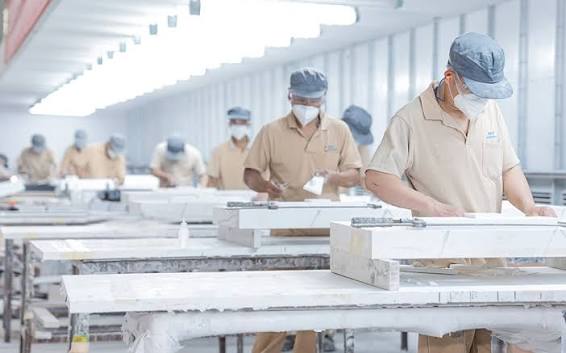
Choosing the right supplier is an important decision for businesses involved in construction, interior design, furniture production, and building material distribution. Solid surface products are widely used in kitchen countertops, bathroom vanities, reception desks, wall panels, integrated basins, and customized furniture. Their quality, appearance, and suitability for different applications depend on material composition, manufacturing processes, and fabrication standards. For buyers handling regular or large-volume orders, the supplier relationship can have a significant impact on product consistency, costs, and project schedules.
Working directly with a Solid Surface Manufacturer gives buyers an opportunity to communicate with the company responsible for producing the materials rather than relying entirely on an intermediary. This direct relationship can provide clearer technical information, better coordination of customized requirements, and greater visibility into production activities. Understanding these advantages helps contractors, wholesalers, architects, and project developers make more informed sourcing decisions.
1. Better Understanding of Product Specifications
One of the main advantages of dealing directly with a manufacturer is access to more detailed product information.
Solid surface products can vary in thickness, dimensions, resin composition, mineral filler content, colors, patterns, and surface finishes. These characteristics influence how materials perform and which applications are suitable for them.
Direct communication allows buyers to discuss technical specifications with the production team or relevant product specialists. They can ask questions about material properties, fabrication methods, maintenance requirements, and recommended applications.
This reduces the risk of selecting products based on incomplete or misunderstood information.
2. More Direct Communication
When buyers work through several intermediaries, important information may need to pass through multiple people before reaching the production team.
This can create misunderstandings about product dimensions, colors, packaging instructions, or customization requirements.
Direct communication with a manufacturer simplifies the process. Buyers can explain their requirements to the company responsible for production and receive information about what can realistically be manufactured.
It also makes it easier to discuss technical questions, clarify specifications, and address production concerns without unnecessary communication delays.
3. Greater Customization Opportunities
Many construction and interior design projects require materials that differ from standard product offerings.
A hotel may need countertops in a specific color, while a commercial development may require customized basin dimensions or decorative wall panels.
Working directly with a manufacturer can make it easier to explore customization possibilities, including:
- Special colors and patterns
- Customized sheet dimensions
- Different thickness options
- Unique surface finishes
- Integrated basin designs
- Curved or formed components
- Customized edge profiles
- Project-specific fabrication requirements
Manufacturers can review technical drawings and assess whether a requested design is compatible with their materials and production capabilities.
Early discussions also help identify limitations before a project moves into full production.
4. Potential Cost Advantages
Purchasing directly from a manufacturer may reduce some costs associated with additional distribution layers.
Intermediaries often provide valuable services, including local inventory, transportation, and customer support. However, their involvement may also add handling charges or commercial margins.
Direct purchasing gives buyers an opportunity to discuss pricing based on product specifications, order quantities, customization requirements, and delivery arrangements.
The overall cost should still be evaluated carefully. Buyers need to consider shipping, import duties, packaging, insurance, storage, and local distribution expenses.
The lowest factory price does not necessarily represent the lowest total purchasing cost.
5. Better Coordination for Large-Volume Orders
Large projects often require substantial quantities of solid surface sheets or customized components.
Managing these orders through direct manufacturer communication can make production coordination more straightforward.
Buyers can discuss order quantities, manufacturing capacity, production batches, and delivery schedules with the company responsible for completing the order.
This is particularly useful when several product types need to be manufactured according to shared specifications.
Clear coordination helps reduce misunderstandings and allows both parties to plan resources more effectively.
6. Improved Product Consistency
Product consistency is important when materials are installed across multiple areas of the same building.
Differences in color, thickness, surface texture, or dimensions can affect the appearance and installation of countertops, bathroom vanities, and wall panels.
Direct relationships with manufacturers can help buyers communicate consistency requirements before production begins.
They may request approved samples, establish color references, and confirm acceptable dimensional tolerances.
Manufacturers can then use these references when preparing production batches and inspecting finished products.
For repeat orders, retaining product specifications and batch records can also support more consistent results.
7. More Accurate Production Information
Manufacturers have direct knowledge of their production schedules, equipment availability, material inventory, and manufacturing capacity.
When buyers communicate directly with them, they may receive more accurate information about expected production timelines.
This is useful for construction projects where countertop installation, bathroom completion, and furniture assembly depend on the timely arrival of materials.
Buyers can discuss potential delays related to raw material procurement, customized production, inspection, or packaging.
Although direct communication cannot eliminate unexpected disruptions, it can improve planning and reduce uncertainty.
8. Easier Access to Samples and Product Testing
Samples are important when evaluating solid surface materials before making a purchasing decision.
A physical sample allows buyers to examine color, texture, thickness, and surface appearance under different lighting conditions.
Direct manufacturer communication can make it easier to request samples of specific products or customized finishes.
Depending on the project, buyers may also request relevant technical documentation or test reports covering properties such as hardness, flexural strength, water absorption, and chemical resistance.
These materials help purchasing teams and designers evaluate whether a product is suitable for its intended application.
9. Stronger Quality Control Coordination
Quality control is not limited to inspecting finished products. It also involves checking raw materials, monitoring manufacturing processes, and verifying that products meet agreed specifications.
When buyers work directly with manufacturers, they can discuss quality requirements with the company responsible for these activities.
This may include agreeing on:
- Product dimensions and tolerances
- Color and finish references
- Surface appearance requirements
- Relevant performance specifications
- Inspection procedures
- Packaging standards
- Documentation requirements
For larger orders, buyers can clarify how defects are identified, how nonconforming products are handled, and what inspection information can be provided before dispatch.
10. Better Support for Technical Questions
Solid surface materials require suitable fabrication and installation methods.
Cutting, joining, sanding, polishing, thermoforming, and basin integration may involve different technical considerations depending on the product.
A manufacturer can provide information about its materials and recommended processing methods.
This can help fabricators and contractors understand appropriate tools, handling procedures, and finishing requirements.
Technical guidance is especially valuable when working with unfamiliar materials or customized product designs.
However, buyers should ensure that installation teams follow the manufacturer’s instructions and applicable project standards.
11. Greater Flexibility for Product Development
Businesses that regularly purchase solid surface products may eventually need new colors, designs, or product configurations.
A direct relationship with a manufacturer can create opportunities to discuss product development requirements.
For example, a furniture company may want a new countertop design, while a bathroom product distributor may need a customized integrated basin.
Manufacturers can evaluate the proposed design, review material compatibility, and determine whether existing production equipment can support the development.
Depending on complexity, product development may involve sample preparation, prototype testing, and technical approval before commercial manufacturing begins.
12. More Efficient Communication About Order Changes
Construction projects sometimes change after materials have been specified or ordered.
Dimensions may be revised, quantities may increase, or designers may request adjustments to colors and finishes.
When buyers communicate directly with the manufacturer, they can discuss the technical and scheduling effects of these changes with the production team.
The manufacturer can explain whether the requested modification is possible and whether it will affect material procurement, production time, or costs.
It is important to confirm approved changes in writing, particularly after manufacturing has started.
Early communication gives both parties more opportunities to manage adjustments without unnecessary disruption.
13. Better Coordination of Packaging and Shipping Requirements
Solid surface sheets and fabricated components need appropriate protection during storage and transportation.
Damage such as scratches, chipped edges, or cracks can create additional costs and delay installation.
Direct purchasing allows buyers to discuss packaging requirements with the manufacturer before goods are prepared for dispatch.
Important considerations include:
- Protective surface coverings
- Suitable pallets and supports
- Secure loading arrangements
- Product separation where necessary
- Clear package labeling
- Handling instructions
- Export packaging requirements
Buyers should also clarify responsibility for transportation, insurance, customs documentation, and damage reporting.
This helps prevent disagreements when products arrive at their destination.
14. Building a Long-Term Business Relationship
Regular communication with a manufacturer can develop into a long-term business relationship.
For wholesalers, contractors, and furniture producers, an established relationship may make repeat purchasing and technical coordination easier.
Over time, the manufacturer can become familiar with the buyer’s product preferences, common dimensions, quality expectations, and ordering patterns.
This familiarity may reduce the time needed to explain routine requirements for future orders.
Long-term relationships can also support more effective demand forecasting and production planning, particularly when buyers share expected purchasing volumes in advance.
15. Greater Transparency in the Supply Chain
Supply chain transparency helps buyers understand where products come from and how they are produced.
When purchasing directly, buyers can ask questions about manufacturing locations, raw material sourcing, production processes, quality inspections, and product documentation.
This information can support supplier evaluation and internal purchasing decisions.
For businesses serving customers with specific technical or environmental requirements, reliable product documentation is particularly important.
However, direct purchasing does not automatically guarantee transparency. Buyers should still request verifiable information and review relevant certificates or reports where necessary.
16. More Opportunities for Private Label and OEM Projects
Businesses that sell products under their own brands may require original equipment manufacturing (OEM) or private-label arrangements.
Direct communication with a manufacturer can make it easier to discuss these requirements.
Depending on production capabilities, manufacturers may support customized product dimensions, branding, packaging, and selected design features.
For example, a distributor may want coordinated solid surface vanity tops or customized sheets that fit its market requirements.
Before entering an OEM arrangement, both parties should clarify product ownership, technical specifications, quality standards, packaging responsibilities, minimum order quantities, and commercial terms.
17. Easier Access to After-Sales Assistance
After-sales support is important when products are used in construction and interior projects.
Buyers may need clarification about maintenance, installation, handling, replacement components, or product performance after delivery.
Working directly with the manufacturer can provide a clearer communication route for technical questions.
The manufacturer may be able to review product specifications and help determine whether an issue relates to material characteristics, fabrication, installation, or maintenance.
Buyers should confirm the scope of after-sales support and warranty conditions before placing an order rather than assuming that all manufacturers provide identical services.
18. Supporting Better Purchasing Decisions
Direct access to product and production information can help purchasing teams compare suppliers more accurately.
Instead of evaluating products only through price lists or distributor descriptions, buyers can discuss specifications and manufacturing capabilities with the source.
A structured supplier evaluation may consider:
| Evaluation factor | What buyers should examine |
|---|---|
| Product quality | Material characteristics and inspection procedures |
| Manufacturing capacity | Ability to handle required quantities |
| Customization | Available colors, dimensions, and designs |
| Pricing | Product cost and additional purchasing expenses |
| Lead time | Production and delivery schedules |
| Documentation | Technical specifications and test reports |
| Communication | Responsiveness and clarity |
| After-sales support | Warranty and technical assistance |
This approach helps buyers assess the complete value of a supplier relationship.
19. Understanding the Responsibilities of Direct Purchasing
Although direct purchasing offers several advantages, it also requires buyers to manage certain responsibilities.
For international orders, customers may need to arrange freight forwarding, customs clearance, import documentation, and local transportation.
They should also understand payment terms, production approvals, inspection requirements, and delivery conditions.
Before confirming an order, buyers should review the commercial agreement carefully and clarify responsibilities for delays, defects, replacements, and transportation damage.
Direct purchasing works most effectively when both parties have clearly defined expectations and documented procedures.
20. When Working Directly with a Manufacturer Makes the Most Sense
Direct sourcing can be particularly useful for businesses that purchase solid surface materials regularly or require customized products.
It may be a suitable approach for:
- Building material wholesalers
- Furniture manufacturers
- Kitchen and bathroom companies
- Interior design contractors
- Hotel development projects
- Healthcare facility developers
- Commercial construction companies
- Large residential developments
Smaller buyers may sometimes benefit more from local distributors that maintain inventory and provide convenient delivery or installation support.
The best sourcing model depends on order volume, customization requirements, location, available resources, and the level of technical assistance needed.
Conclusion
Working directly with a solid surface manufacturer can provide important advantages, including clearer product information, better customization coordination, improved production visibility, and more direct quality control communication. It can also help businesses manage large-volume orders, evaluate samples, discuss technical requirements, and establish long-term supply relationships.
However, buyers should consider the full purchasing process rather than focusing only on factory pricing. Shipping arrangements, documentation, import responsibilities, warranty conditions, and after-sales support all influence the overall value of a sourcing decision. By evaluating these factors carefully and maintaining clear communication, businesses can build productive manufacturer relationships that support their construction, distribution, and interior design requirements.






Post Comment