How a Conveyor Belt Machine Improves Manufacturing Efficiency
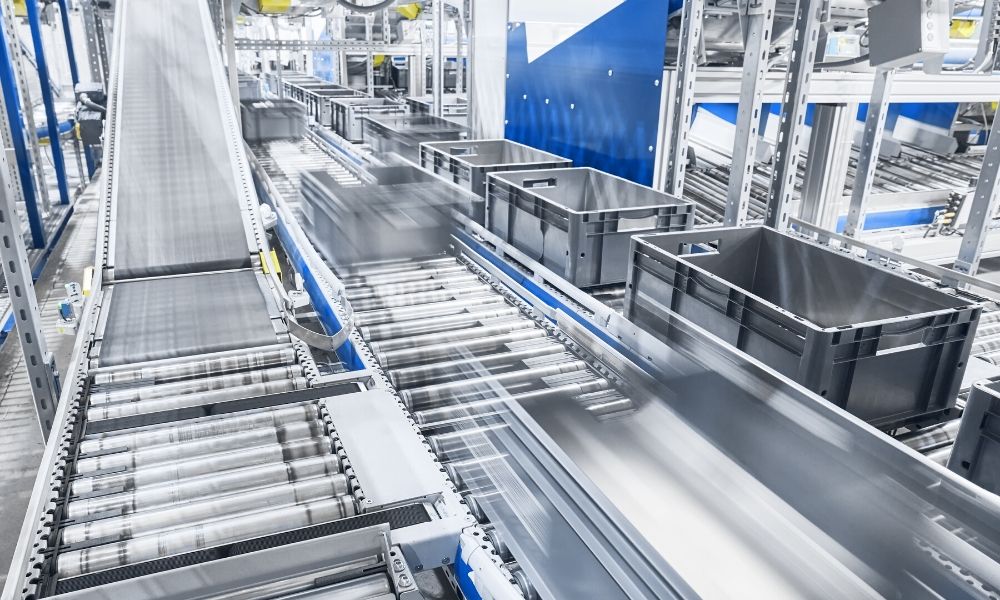
Manufacturing efficiency depends on how well individual production activities work together. Materials must arrive at the correct workstation, products need to move between operations, and completed items must reach inspection or packaging without unnecessary delay. When employees repeatedly carry goods from one area to another, valuable time can be spent on transport rather than production. A coordinated conveying arrangement helps reduce these interruptions and gives the facility a more organized way to move products.
A Conveyor Belt Machine transports materials on a continuous moving belt driven by a motor and supported by pulleys or rollers. It can be configured for individual components, cartons, packaged goods, or suitable bulk materials. When integrated with production equipment and controls, it can help maintain a steady transfer rate and reduce the manual effort required to move items through the manufacturing process.
1. Keeps Production Stages Connected
A conveyor belt can link separate work areas into a continuous production route. Components may move from assembly to testing, then continue to labeling, packing, or dispatch.
This arrangement reduces the need for workers to carry products between stations. It also makes the movement of materials easier to plan because each stage receives items through a defined path.
The conveyor should be designed around the sequence of operations. Its length, speed, and transfer points need to support the production layout without obstructing access or creating unnecessary handling.
2. Reduces Waiting Between Operations
A delay at one workstation can affect every stage that depends on its output. Conveyors help reduce transfer time by moving products directly between processes.
For example, finished components can travel toward inspection while another batch is being assembled. Buffer sections or accumulation zones may also allow temporary storage between processes where the system design permits it.
However, faster movement does not automatically mean higher productivity. Conveyor speed must match the processing capacity of the receiving equipment and the pace at which employees can complete their tasks.
3. Improves Consistency in Product Movement
Manual handling can result in irregular spacing, inconsistent positioning, or variations in transfer time. A properly configured belt system provides a more predictable route and movement pattern.
This can be valuable in automated production lines, where sensors, scanners, and machinery depend on products arriving at known locations. Guides and positioning devices may help keep items aligned.
For products with unusual shapes or fragile surfaces, the belt material and support arrangement should be selected to prevent slipping or damage.
4. Supports Automation
Conveyor belt machines can be integrated with automated equipment such as robotic arms, sorting systems, inspection cameras, and packaging machines.
Sensors may detect the presence of an item and trigger the next operation. Variable-speed drives can adjust the belt’s movement to suit different production stages, while control systems can coordinate multiple conveyor sections.
The system should include safeguards for faults, blockages, and unavailable downstream equipment. Clear status indicators also help operators understand whether the line is running normally.
5. Makes Better Use of Employee Time
When a machine handles routine product transfer, employees can spend more time on activities that require judgment and attention. These may include quality checks, machine setup, assembly, and production monitoring.
This does not mean that conveyors remove the need for supervision. Workers still need to load and unload products where appropriate, monitor the equipment, and respond to operating issues.
A good workstation layout should make these tasks convenient while keeping people clear of hazardous moving components.
6. Accommodates Different Manufacturing Applications
Belt conveyor machines are used in many industries, including electronics, food processing, automotive manufacturing, packaging, and general assembly.
Different applications require different belt surfaces and construction. Some need resistance to oils or heat, while others require materials suitable for frequent cleaning or particular hygiene standards.
The load’s weight, dimensions, temperature, and surface condition should be evaluated before specifying the belt and drive arrangement.
7. Reduces Certain Handling Risks
Repeated lifting and carrying can create physical demands for employees. Mechanical transfer can reduce some of these tasks and help keep products on a consistent route.
At the same time, conveyors introduce mechanical hazards. Guarding, emergency stops, safe access, and suitable training are necessary. Employees should never reach into moving equipment to retrieve trapped items.
Maintenance and cleaning should follow appropriate isolation procedures.
8. Maintenance Protects Productivity
A conveyor that is not maintained can cause belt slippage, mistracking, unexpected stops, and product damage. Regular inspections should cover belt condition, tension, tracking, pulleys, rollers, bearings, motors, and control devices.
Keeping records of wear and breakdowns helps maintenance teams identify recurring problems and plan repairs before failures interrupt production.
Conclusion
A conveyor belt machine can improve manufacturing efficiency by connecting production stages, reducing routine transfer work, and supporting automation. Its contribution depends on suitable capacity, correct integration, safe operating arrangements, and consistent maintenance. When selected around the actual manufacturing process, it can help create a smoother and more predictable flow of products.






Post Comment