Custom PE Coated Kraft Paper for Modern Food and Beverage Packaging
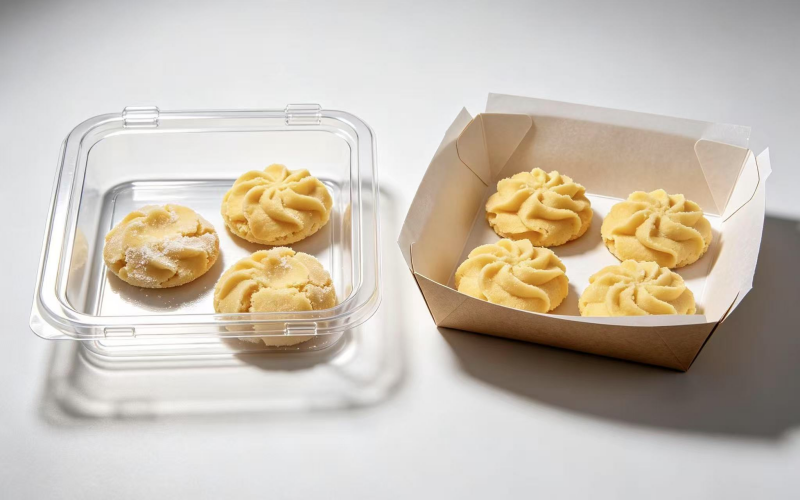
Food and beverage packaging must do more than display a brand. It needs to accommodate moisture, handling, storage, transportation, and the specific requirements of the product inside. Paper-based materials are often selected for their printable surfaces and practical converting characteristics, while coatings can provide additional functional properties. Custom PE coated kraft paper combines a kraft paper substrate with a polyethylene layer specified for a particular packaging application.
When businesses source Custom Pe Coated Kraft Paper, they should consider how the paper grade and coating will work together in the finished package. Customization can involve the paper’s grammage, coating weight, roll dimensions, surface requirements, and intended use. These details matter because different packaging formats place different demands on the material.
Understanding the Material Structure
Kraft paper is commonly used as a packaging substrate because it can provide a practical balance of strength, structure, and printability, depending on its grade. Polyethylene, often abbreviated as PE, is a plastic material that can be applied as a coating to create a functional layer on the paper.
The resulting construction combines two materials with different roles. The paper provides much of the structure, while the coating can help reduce direct contact between the contents and the paper fibres and improve resistance to moisture.
The precise performance depends on the paper specification, coating formulation, coating weight, and manufacturing process. A product described as PE coated kraft paper should therefore be assessed using its technical data rather than its name alone.
Why Custom Specifications Matter
There is no single specification that suits every packaging application. A material intended for a paper cup may have different requirements from one used for a food wrapper or a packaging component.
Several variables should be considered before ordering.
Base paper grammage: Grammage affects the amount of paper used per square metre and contributes to the material’s overall structure. The required value depends on package dimensions, stiffness, forming requirements, and expected use.
PE coating weight: The coating quantity influences barrier characteristics and can affect heat-sealing or converting behavior. The appropriate level should be established through technical requirements and practical testing.
Coating arrangement: A material may be coated on one side or both sides. The correct arrangement depends on which surfaces need protection and how the package is constructed.
Roll width and diameter: These dimensions should match the converting equipment. Incorrect roll specifications can create handling difficulties, unnecessary trimming, or production interruptions.
Surface and printing needs: If the kraft paper will carry branding or product information, confirm that the selected surface is appropriate for the chosen printing method.
Applications Across Food and Beverage Packaging
Disposable paper cups
PE coated kraft paper can be used as a substrate for cup stock, which is subsequently converted into cup fans and other components. The paper and coating must support the cup’s forming and sealing operations while meeting the intended beverage requirements.
Food wrappers
Certain food packaging formats use coated paper to help manage contact with oily or moist products. The appropriate specification depends on the food type, temperature, storage period, and packaging design. A general-purpose PE coating should not be assumed to meet every grease or moisture barrier requirement.
Takeaway packaging
Takeaway businesses need packaging that can handle movement, short-term storage, and contact with food. Coated kraft paper may be considered for selected packaging components where its physical and barrier properties are suitable.
Specialty food packaging
Custom materials may also be used for specific product formats that require defined roll dimensions or a particular combination of printability and moisture resistance. Each application should be assessed separately rather than using one grade across unrelated products.
Production Considerations
A material’s performance is influenced by the converting process. During printing, coating, cutting, folding, or forming, the substrate must behave consistently with the equipment being used.
For cup manufacturing, the coated paper must be suitable for blank cutting and cup formation. Side-seam and bottom-sealing performance should be checked through trials using the intended machinery. For flexible packaging or wrappers, other factors such as web tension, heat-sealing conditions, and roll handling may be more important.
Storage also affects material condition. Keep rolls protected from excessive moisture, dust, direct sunlight, and physical damage. Follow the supplier’s recommended storage conditions and avoid leaving packaging materials exposed in production areas.
Food-Contact and Regulatory Checks
Food packaging requires more than satisfactory mechanical performance. Buyers must confirm that the complete material construction is suitable for its intended contact with food or beverages.
Ask suppliers for relevant declarations, test reports, and compliance documentation for the intended market. Check that the documentation covers the actual paper grade, coating, inks, and other components where applicable. Temperature, contact duration, and food type may influence the requirements.
Avoid assuming that a material is approved for all food uses simply because it contains PE or is described as food grade. Confirm the specific conditions under which it is intended to be used.
Questions to Ask a Supplier
Before approving a purchase, request the base paper grammage, coating weight, coating arrangement, roll dimensions, and relevant performance information. Ask whether samples are available and whether the supplier can provide consistent specifications for repeat orders.
It is also useful to discuss minimum order quantities, lead times, packaging methods, and quality inspection procedures. These commercial details can be just as important as the material itself when planning regular production.
Choosing a Material That Fits the Application
Custom PE coated kraft paper can support a range of modern food and beverage packaging formats when its construction is matched to the product and manufacturing process. The most suitable option is not necessarily the heaviest paper or the highest coating weight. It is the specification that meets the required performance without unnecessary material use or production complications.
By defining the application clearly, reviewing technical documentation, testing samples, and confirming food-contact suitability, businesses can make better purchasing decisions and establish a more dependable packaging supply process.







Post Comment