Energy Efficiency and Responsiveness of Voice Coil Motor Systems
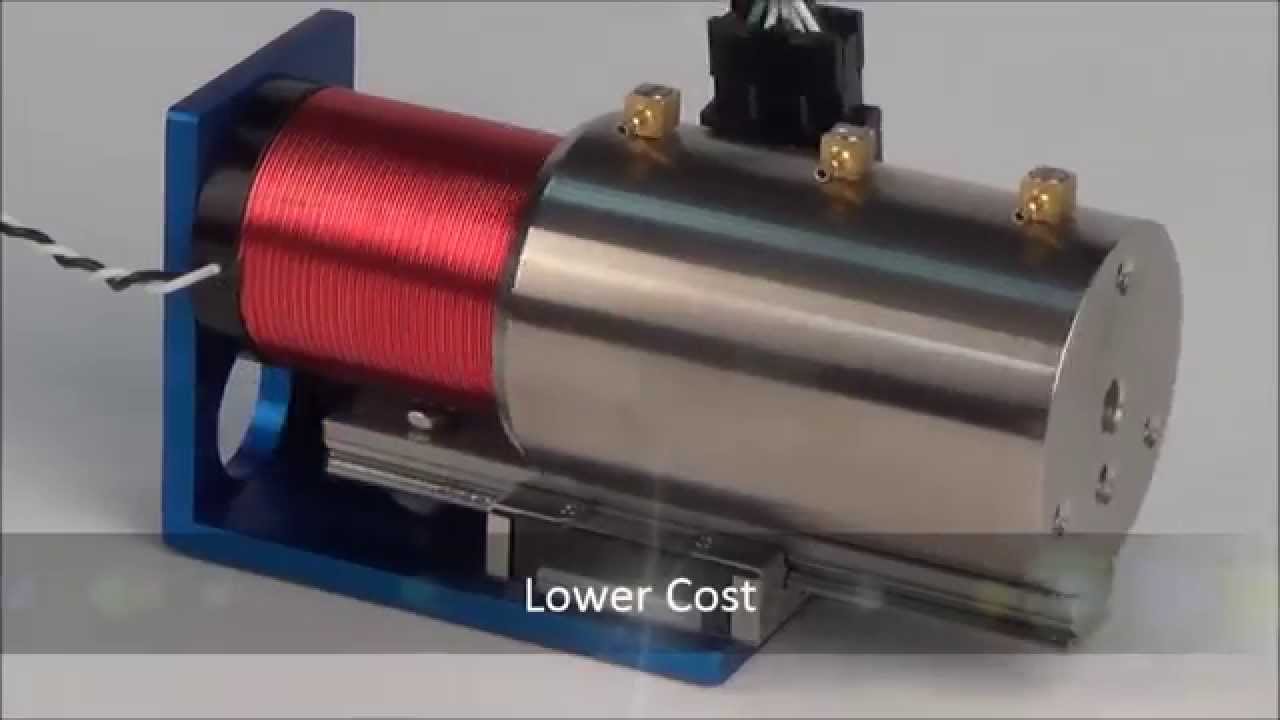
Voice coil motors are widely used in precision motion applications where fast response, smooth movement, and accurate positioning are essential. Their electromagnetic design enables direct conversion of electrical energy into controlled mechanical motion, making them highly effective in robotics, optics, semiconductor equipment, and advanced automation systems.
In modern motion engineering, a voice coil motor is valued for its direct-drive structure. Unlike conventional systems that rely on gears or lead screws, it produces motion through electromagnetic force alone. This eliminates mechanical friction and backlash, improving both responsiveness and motion quality in high-precision environments.
Table of Contents
ToggleUnderstanding Energy Efficiency in Voice Coil Motor Systems
Energy efficiency in voice coil motors refers to how effectively electrical input power is converted into useful mechanical motion. Because the system operates through direct electromagnetic interaction, it avoids many losses associated with mechanical transmission systems.
However, efficiency is influenced by several factors:
- Coil resistance and electrical losses
- Magnetic field strength and uniformity
- Thermal energy generation during operation
- Duty cycle and load conditions
Although highly efficient in motion conversion, continuous operation requires careful thermal and electrical management to maintain optimal performance.
Factors Affecting Responsiveness
Responsiveness is one of the strongest advantages of voice coil motor systems. It describes how quickly the motor reacts to changes in input signals and adjusts its position or force accordingly.
Key factors influencing responsiveness include:
- Low moving mass of the actuator components
- High magnetic field strength for rapid force generation
- Low electrical inductance in the coil
- High-bandwidth control system design
These factors enable near-instantaneous reaction to control signals, making voice coil motors ideal for high-speed precision applications.
Role of Direct-Drive Design
The direct-drive nature of voice coil motors plays a critical role in both efficiency and responsiveness. By eliminating mechanical transmission components, the system reduces energy loss and improves dynamic performance.
Benefits of this design include:
- Instant force transmission without delay
- Reduced mechanical friction and wear
- Improved motion smoothness
- Higher system reliability over time
This simplicity allows the motor to respond quickly and efficiently to control inputs.
Thermal Impact on Efficiency and Speed
Thermal behavior is a key consideration in voice coil motor systems. As current flows through the coil, heat is generated due to electrical resistance, which can impact both efficiency and responsiveness.
Thermal effects include:
- Increased resistance reducing efficiency
- Potential reduction in force output
- Changes in system response characteristics
- Need for cooling or heat dissipation systems
Effective thermal management is essential to maintain consistent performance during continuous operation.
Importance of Control System Design
Advanced control systems significantly enhance both energy efficiency and responsiveness. By regulating current precisely and adjusting in real time based on feedback, these systems optimize performance under varying conditions.
Control system functions include:
- Real-time current adjustment
- Load compensation for stable motion
- Energy optimization during operation
- Dynamic response tuning
Closed-loop control ensures that energy is used efficiently while maintaining high-speed performance.
Trade-Off Between Efficiency and Responsiveness
In voice coil motor systems, there is often a balance between energy efficiency and responsiveness. Increasing responsiveness may require higher current levels, which can lead to greater energy consumption and heat generation.
Engineers manage this trade-off by:
- Optimizing coil and magnet design
- Using advanced feedback control algorithms
- Selecting appropriate duty cycles
- Enhancing thermal dissipation systems
This ensures balanced performance across different operating conditions.
Applications Requiring High Efficiency and Fast Response
Voice coil motors are widely used in systems where both energy efficiency and responsiveness are critical, including:
- Semiconductor wafer positioning systems
- Optical focusing and imaging devices
- High-speed inspection equipment
- Robotics and micro-positioning systems
- Medical diagnostic and precision instruments
In these applications, performance consistency is essential for accuracy and reliability.
Conclusion
Energy efficiency and responsiveness are key performance characteristics of voice coil motor systems. Their direct-drive electromagnetic design enables fast, smooth, and precise motion with minimal mechanical loss. While thermal and control challenges exist, advanced engineering solutions ensure optimal performance. As precision automation continues to evolve, voice coil motor technology will remain essential in high-performance motion systems.





Post Comment