Industrial Uses of Disc Bowl Centrifuges in Liquid Separation
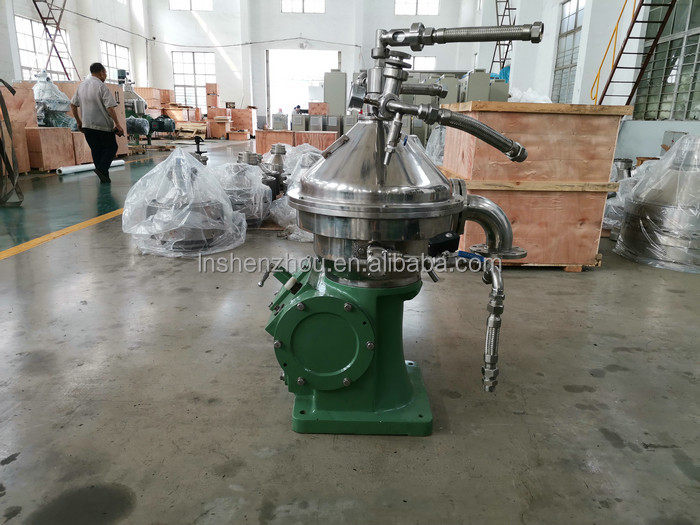
Liquid separation is an essential part of many industrial processes. Whether the goal is to remove fine suspended particles, separate two liquid phases, or clarify a valuable product, efficient separation can improve process stability and final product quality.
A Disc Bowl Centrifuge uses high-speed centrifugal force to accelerate separation according to differences in density. Its compact bowl and closely spaced discs provide a large effective separation area, making this type of equipment suitable for continuous processing in many industries.
Food and Beverage Processing
Food and beverage production often requires the clarification of liquids and removal of fine suspended materials. Disc bowl centrifuges can be used where continuous separation and controlled processing are required.
Typical applications may include the clarification of beverages, separation of food-grade liquids, and recovery of valuable liquid components from process streams.
Dairy Processing
Dairy operations frequently require separation or clarification of milk and other liquid products. Centrifugal separation can assist with removing unwanted particles and separating components according to their density.
The ability to operate continuously can also make disc bowl centrifuges suitable for integration into larger dairy processing lines.
Edible Oil Processing
Vegetable and other edible oils may contain water, fine solids, or other unwanted materials following processing. Centrifugal separation can help clarify the oil and separate liquid phases more efficiently.
The appropriate centrifuge configuration depends on the oil’s viscosity, temperature, density differences, and the amount of suspended material present.
Wastewater Treatment
Industrial wastewater can contain suspended solids, oils, and other materials that need to be separated before further treatment or discharge.
Disc bowl centrifuges can provide continuous separation in suitable wastewater applications. Their compact design can be useful where processing capacity needs to be combined with relatively limited equipment space.
Chemical Processing
Chemical manufacturing often involves mixtures containing liquids and fine solids or two immiscible liquid phases. Centrifugal separation can be used as part of purification, clarification, or recovery processes.
Because chemical feed streams can vary considerably in viscosity, density, temperature, and chemical compatibility, equipment materials and operating parameters need to be selected according to the specific process.
Pharmaceutical Applications
Pharmaceutical manufacturing requires controlled processing and consistent product quality. Centrifugal separation may be used for clarification or phase separation in selected liquid-processing applications.
Equipment selection should take into account hygiene requirements, cleanability, material compatibility, and the characteristics of the pharmaceutical process.
Biofuel and Renewable Fuel Processing
Biofuel production can generate mixtures containing oil, water, solids, and other process materials. Centrifugal separation can help separate these components and improve the quality of intermediate or finished streams.
Continuous operation can be particularly useful where the centrifuge forms part of an automated fuel-processing system.
Marine and Fuel Oil Treatment
Fuel and lubricating oils can accumulate water and fine contaminants during storage or operation. Centrifugal separation can help remove these unwanted components and improve the condition of the treated oil.
The effectiveness of the process depends on factors such as contaminant concentration, particle size, temperature, viscosity, and density differences between the phases.
Mineral and Industrial Process Liquids
Various mineral-processing operations produce liquid streams containing fine particles. A disc bowl centrifuge can be used in suitable clarification applications where fine solids need to be separated from a liquid phase.
The actual performance depends on the properties of the particles and liquid, as well as the required throughput and separation target.
Key Factors When Selecting a Centrifuge
The best equipment configuration depends on the specific liquid separation requirement. Important factors include:
- Feed flow rate
- Liquid viscosity
- Density difference between phases
- Particle size and concentration
- Required separation efficiency
- Operating temperature
- Material compatibility
- Solids discharge requirements
These factors help determine the appropriate bowl design, disc arrangement, operating speed, and control configuration.
Role of Shenzhou Machinery
Shenzhou Machinery is one manufacturer involved in centrifugal separation equipment. When evaluating any disc bowl centrifuge, however, users should focus on whether the machine’s design, capacity, materials, controls, and maintenance requirements match the intended application.
Conclusion
Disc bowl centrifuges have applications across food processing, dairy production, edible oils, wastewater treatment, chemical processing, pharmaceuticals, biofuels, and other industries where efficient liquid separation is required.
Their ability to provide high-speed, continuous separation in a relatively compact system makes them useful for many industrial processes. Proper equipment selection and control of feed conditions remain essential for achieving consistent separation performance and reliable operation.


Post Comment