Wooden Abacus: An Effective Learning Tool for Developing Early Math Skills
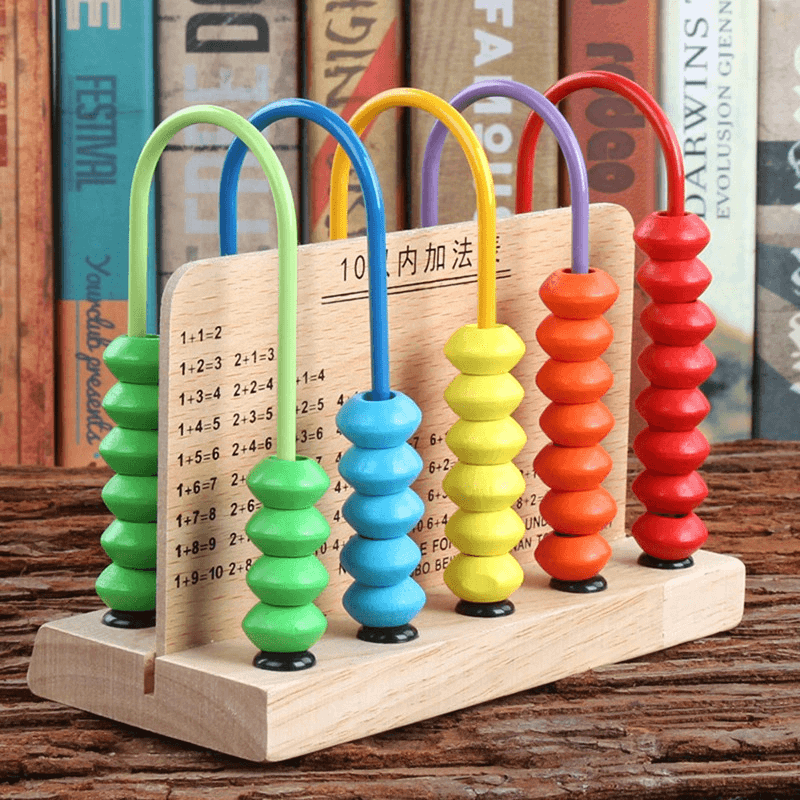
Learning mathematics becomes more engaging when children can explore numbers through practical activities. During the early stages of education, visual examples and hands-on experiences can help young learners understand concepts that may otherwise seem abstract. Counting objects, grouping items, and comparing quantities are useful ways to introduce basic arithmetic and build confidence with numbers.
A Wooden Abacus is a traditional educational tool that makes these activities interactive. It typically consists of a wooden frame with rows of beads that slide along horizontal rods. Children can move the beads to represent quantities, explore number patterns, and practice simple calculations. Its straightforward design makes it suitable for homes, preschools, classrooms, and early learning centers.
What Is a Wooden Abacus?
An abacus is a counting instrument that uses movable beads or counters to represent numbers. Different versions have been used throughout history, with designs varying across regions and mathematical traditions.
A typical educational wooden abacus includes:
- Wooden frame: Supports the rods and keeps the structure stable.
- Horizontal rods: Hold the movable beads in organized rows.
- Counting beads: Slide along the rods to represent quantities.
- Support base: Helps the abacus remain upright during use.
Some designs feature colored beads to make counting and grouping easier for beginners. Others use different bead arrangements to introduce more advanced number concepts.
The abacus provides a physical way to represent mathematical values. Instead of only reading or writing numbers, children can move individual beads and observe how quantities change.
Why Is a Wooden Abacus Useful for Early Math Learning?
Young children often learn effectively when they can see and manipulate objects. An abacus supports this approach by connecting numerical ideas with physical actions.
1. Makes Counting More Visual
Counting can be easier to understand when children can move one bead for each number they say. This helps them connect number words with individual quantities.
For example, a child can slide five beads across a rod while counting from one to five. The visible arrangement provides a reference for the quantity being represented.
2. Introduces Basic Arithmetic
The abacus can be used to demonstrate simple addition and subtraction. Children can move beads to represent adding more items or removing existing ones.
For example, moving three beads and then two additional beads helps illustrate that three plus two equals five.
3. Encourages Number Recognition
Bead arrangements can help children become familiar with different quantities. Teachers and parents can ask learners to show a particular number or compare two groups of beads.
Repeated activities can support the development of basic number recognition.
4. Develops Fine Motor Skills
Moving beads along rods involves controlled finger movements. This gives children opportunities to practice hand coordination and precise manipulation.
5. Supports Concentration
Counting and arranging beads require attention to the task. Children need to follow a sequence and keep track of the number of beads they have moved.
6. Builds Mathematical Confidence
Physical activities can make early mathematics feel more approachable. Children can experiment with different bead arrangements, correct mistakes, and gradually become more comfortable working with numbers.
How to Use a Wooden Abacus
An abacus can support different learning activities, from simple counting to introductory arithmetic. Parents and teachers can adjust the exercises according to a child’s age and understanding.
Step 1: Introduce the Beads
Begin by allowing the child to explore the frame and move the beads freely. Explain that each bead can represent one unit when using the abacus for basic counting.
Step 2: Practice Counting
Ask the child to move one bead at a time while counting aloud. Start with small numbers before gradually introducing larger quantities.
For example, the child can move four beads while saying the numbers from one to four.
Step 3: Represent Specific Numbers
Give the child a number and ask them to show it using the beads. This encourages them to connect written or spoken numbers with physical quantities.
Step 4: Introduce Addition
Move a group of beads to represent the first number, then move additional beads to represent the second number.
For example:
- Start with two beads.
- Add three more beads.
- Count the total.
- Explain that two plus three equals five.
Step 5: Practice Subtraction
Begin with a group of beads and move some of them back to represent taking away.
For example, start with six beads and move two away. Count the remaining beads to demonstrate that six minus two equals four.
Step 6: Explore Patterns
Once children understand basic counting, use the rows to introduce number sequences, grouping, and simple patterns.
These activities can gradually prepare learners for more advanced mathematical ideas.
Educational Benefits of Using a Wooden Abacus
The abacus can support several areas of early development when used as part of varied learning activities.
Develops Number Sense
Number sense involves understanding quantities, relationships between numbers, and how numbers are used. Moving beads allows children to explore these ideas through direct experience.
Introduces Place Value Concepts
Some abacus designs can be used to demonstrate units, tens, hundreds, and larger place values. Each rod or column can represent a different numerical position, depending on the teaching method.
For example, one column may represent units while the next represents tens. This gives learners a visual way to explore how the position of a digit affects its value.
Encourages Logical Thinking
Children can use the abacus to test different ways of representing a number. They can also compare quantities and work out which arrangements produce the same total.
Supports Visual Learning
The physical movement of beads provides a visual reference for mathematical operations. This can complement written exercises and verbal explanations.
Promotes Independent Exploration
Once children understand the basic rules, they can create their own counting challenges, test number combinations, and practice calculations independently.
Encourages Parent-Child Interaction
Parents can use the abacus during short activities at home. Asking children to show numbers, solve simple sums, or create patterns can turn mathematics into a shared experience.
Wooden Abacus Activities for Preschool Children
Preschool learners benefit from simple, playful activities that introduce numbers without creating unnecessary pressure.
Counting Games
Ask children to move a specific number of beads while counting aloud. Begin with small quantities and increase the challenge as they become more confident.
Color Recognition
If the abacus has different bead colors, ask children to identify and count beads of a particular color.
More or Less Activities
Create two groups of beads and ask which group contains more or fewer items. This introduces comparison and quantity concepts.
Number Matching
Show a written number and ask the child to represent it using the beads. This connects visual symbols with quantities.
Pattern Creation
Ask children to create simple sequences using different bead colors or rows. For example, they might arrange a repeating pattern of two colors.
Using a Wooden Abacus in Primary School Classrooms
The abacus can also support structured mathematics lessons for primary school students.
Addition and Subtraction Practice
Teachers can demonstrate calculations using bead movements before asking students to solve similar problems independently.
Multiplication as Repeated Addition
For beginners, multiplication can be introduced through equal groups. For example, students can create three groups of four beads and count the total.
Division and Grouping
Students can divide a collection of beads into equal groups. This provides a physical introduction to sharing and division.
Place Value Exercises
Abacuses with suitable rod arrangements can help students understand the difference between units, tens, and hundreds.
Mathematical Challenges
Teachers can give students a target number and ask them to find different ways to represent it. This encourages flexible thinking and number exploration.
Choosing a Quality Wooden Abacus
Selecting the right abacus involves considering construction, design, bead movement, age suitability, and intended learning activities.
| Buying consideration | What to look for |
|---|---|
| Wood quality | Durable, well-finished wooden components |
| Frame stability | A firm structure that stays in place |
| Rod construction | Secure rods that hold beads properly |
| Bead movement | Smooth movement without excessive looseness |
| Bead size | Appropriate dimensions for the intended age group |
| Color design | Clear colors that support counting activities |
| Number of rows | Suitable for the planned learning exercises |
| Surface finish | Smooth edges without splinters |
| Safety | Age-appropriate construction and materials |
| Storage | A practical size for classroom or home use |
Check the Frame and Base
The frame should be stable enough to remain upright during normal use. A sturdy base helps prevent the abacus from tipping when children move the beads.
Examine the Beads and Rods
Beads should move smoothly without becoming stuck. The rods should be securely attached to the frame and able to withstand repeated use.
Consider the Bead Design
Brightly colored beads can make counting and sorting activities more engaging. However, the most important feature is that the colors and arrangement are clear enough for the intended learning purpose.
Choose an Age-Appropriate Model
Younger children generally benefit from simple designs with easy-to-handle beads. More advanced learners may use models with additional rows or place-value arrangements.
Always follow the manufacturer’s age recommendations and safety instructions.
Wooden Abacus Compared With Digital Counting Tools
Digital applications can provide interactive mathematical exercises, but a physical abacus offers a different learning experience.
| Feature | Wooden abacus | Digital counting tools |
|---|---|---|
| Interaction | Physical movement of beads | Touchscreen or keyboard controls |
| Visual learning | Beads represent quantities directly | Numbers and digital objects |
| Motor activity | Involves handling and moving beads | Usually involves screen interaction |
| Electricity | Does not require power | Requires a suitable device |
| Learning format | Hands-on and tactile | Screen-based and interactive |
| Portability | Depends on frame size | Depends on the digital device |
Both approaches can complement early mathematics education. A wooden abacus is particularly useful when children need to explore quantities through physical objects.
Tips for Making Abacus Learning More Enjoyable
A few practical strategies can help children stay interested while learning with an abacus.
- Keep activities short: Begin with brief exercises that match the child’s attention span.
- Use familiar examples: Connect counting activities with everyday objects such as toys or fruit.
- Start with small numbers: Introduce more complex calculations only after basic counting is understood.
- Encourage independent practice: Allow children to explore different bead arrangements.
- Ask simple questions: Questions such as “How many are left?” encourage active thinking.
- Celebrate progress: Recognize effort and improvement rather than expecting immediate accuracy.
- Combine physical and written work: Use bead movements alongside number cards, drawings, or worksheets.
Caring for and Maintaining a Wooden Abacus
Proper maintenance helps keep an abacus in good condition, especially when it is used frequently in classrooms or learning centers.
- Wipe the wooden frame and beads with a soft, dry cloth.
- Avoid soaking the wooden components in water.
- Store the abacus in a dry location.
- Keep it away from excessive heat and moisture.
- Check rods and joints regularly for looseness or damage.
- Inspect beads for cracks or rough surfaces.
- Follow the manufacturer’s cleaning instructions.
For products used by young children, adults should inspect the abacus regularly and remove damaged items from use.
What to Consider When Buying a Wooden Abacus Online
Online shopping provides access to different educational abacus designs, but buyers should review the product information carefully.
Check the product description for dimensions, materials, number of rows, bead design, and recommended age range. These details help determine whether the model is suitable for basic counting or more advanced mathematical activities.
It is also useful to review customer feedback when available. Comments about bead movement, frame stability, and construction quality can provide additional information about everyday use.
For schools and educational organizations, consider how easily the abacus can be stored, distributed, and used by multiple students. A practical design can make classroom activities easier to organize.
Conclusion
The Wooden Abacus is a practical learning tool that can make early mathematics more visual and interactive. By moving beads to represent quantities, children can explore counting, addition, subtraction, grouping, patterns, and introductory place value.
Its simple design makes it suitable for homes, preschools, classrooms, and learning centers. When selecting an abacus, consider frame stability, bead movement, material quality, age suitability, and the intended learning activities.
With regular practice and supportive guidance, an abacus can help children build familiarity with numbers, develop confidence in basic arithmetic, and enjoy learning through hands-on exploration.





Post Comment