Comparing O-Ring Manufacturers: Quality, Customization, and Production Capacity
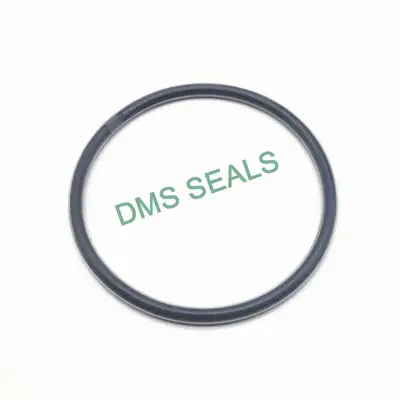
Choosing an O-ring manufacturer is an important decision for businesses that depend on reliable sealing components. Although many manufacturers offer similar products, their capabilities can differ significantly in terms of material quality, production methods, customization options, and order capacity. Selecting the wrong supplier may result in inconsistent products, delayed deliveries, or seals that fail to meet application requirements.
A careful comparison of each O Ring Manufacturer helps buyers identify a partner that can meet both technical and commercial expectations. Rather than focusing only on unit price, businesses should evaluate three essential areas: product quality, manufacturing flexibility, and the ability to handle current and future production demands.
1. Comparing Product Quality and Manufacturing Standards
Quality should be one of the first factors considered when evaluating manufacturers. An O-ring must maintain an effective seal under specific operating conditions, and even small manufacturing inconsistencies can affect its performance.
A reliable manufacturer should have defined procedures for material selection, production monitoring, and finished-product inspection.
Material Selection and Consistency
Different applications require different elastomer compounds. Common materials include:
- NBR: Frequently used in applications involving petroleum-based oils and fuels.
- FKM: Suitable for many environments involving elevated temperatures, oils, and chemicals.
- EPDM: Often selected for water systems, weather exposure, and certain chemical applications.
- Silicone: Valued for flexibility across a broad temperature range.
- Neoprene: Used in applications requiring a balance of weather and general chemical resistance.
When comparing manufacturers, ask how they select and verify their rubber compounds. Consistent material properties across production batches are important, particularly when ordering replacement seals over an extended period.
Dimensional Accuracy
An O-ring’s dimensions directly affect how it fits into a sealing groove. Incorrect inner diameter, outer diameter, or cross-sectional thickness can lead to installation difficulties, insufficient compression, or premature failure.
Manufacturers should have suitable measurement equipment and inspection procedures to verify that products meet agreed tolerances. For specialized applications, confirm whether they can work from technical drawings or recognized sizing standards.
Quality Testing and Documentation
Quality control should extend beyond visual inspection. Depending on the application, useful testing may include hardness, tensile strength, elongation, compression set, and dimensional verification.
Ask potential manufacturers whether they can provide inspection reports, material information, and relevant quality documentation. This makes it easier to assess whether their products meet your technical requirements.
2. Evaluating Customization Capabilities
Standard O-rings are suitable for many applications, but some equipment requires specialized dimensions, compounds, or performance characteristics. In these situations, a manufacturer’s customization capabilities become particularly important.
Custom Sizes and Specifications
A capable manufacturer should be able to assess non-standard requirements and produce O-rings according to approved drawings or specifications.
Customization may involve:
- Special inner and outer diameters.
- Non-standard cross-sectional dimensions.
- Specific dimensional tolerances.
- Different rubber hardness levels.
- Custom material compounds.
- Particular color or identification requirements.
The manufacturer should also be willing to discuss design limitations before production begins. This can prevent unnecessary tooling expenses and avoid problems during installation.
Material Recommendations
Choosing a material based only on its general properties can be risky. A seal may need to resist several conditions simultaneously, such as high temperature, chemical exposure, and continuous compression.
Manufacturers with strong material knowledge can help evaluate these factors and recommend suitable compounds. Buyers should provide accurate information about operating fluids, pressure, temperature, and expected service life to support this process.
Prototype and Sample Production
For new products or modified sealing designs, prototype production can be valuable. Samples allow engineering teams to check dimensions, installation fit, and performance before approving larger quantities.
When comparing suppliers, find out whether they offer sample production, how they handle design revisions, and whether testing support is available. These services can make product development more efficient and reduce the risk of expensive production errors.
3. Assessing Production Capacity and Scalability
A manufacturer may produce excellent O-rings but still struggle to meet the volume or delivery requirements of a growing business. Production capacity is therefore another major factor in supplier evaluation.
Equipment and Manufacturing Processes
O-rings are commonly produced through compression molding, injection molding, and transfer molding. Each process has different tooling and production considerations.
A manufacturer’s equipment should be appropriate for the required product dimensions, material, complexity, and order quantity. Ask about its available production processes and whether it can handle both standard and specialized designs.
Ability to Handle Different Order Volumes
Some businesses need small quantities for maintenance, testing, or product development. Others require high-volume production for continuous manufacturing operations.
A suitable supplier should be able to explain its minimum order quantities, typical production lead times, and ability to increase output when demand rises.
It is also useful to understand whether the manufacturer can support repeat orders without significant variations in product quality.
Delivery Planning and Inventory Support
Production capacity is only part of the supply chain. Reliable delivery planning helps prevent shortages that could interrupt business operations.
When comparing manufacturers, consider:
- Standard production lead times.
- Capacity for urgent or repeat orders.
- Communication about production delays.
- Packaging and shipping arrangements.
- Inventory planning for frequently used products.
A manufacturer with organized production scheduling can help businesses maintain more predictable procurement operations.
4. Comparing Manufacturers Through Practical Criteria
To make supplier evaluation easier, businesses can use a consistent set of comparison points rather than relying on general claims about quality or experience.
| Evaluation factor | What to check |
|---|---|
| Material quality | Compound specifications and material verification |
| Dimensional control | Measurement methods and allowable tolerances |
| Quality assurance | Inspection procedures and available test reports |
| Customization | Special sizes, materials, and design support |
| Production capacity | Equipment, output, and scalability |
| Lead times | Standard schedules and urgent-order capability |
| Communication | Technical support and order updates |
| Documentation | Specifications, traceability, and quality records |
This approach helps purchasing and engineering teams compare manufacturers using measurable requirements.
5. Why the Lowest Price Is Not Always the Best Choice
Price is naturally important when purchasing industrial components, but it should not be the only deciding factor. A lower-priced O-ring may become more expensive over time if it has inconsistent dimensions, unsuitable material properties, or a shorter service life.
For example, frequent seal replacement can increase maintenance labor, equipment downtime, and production losses. In critical machinery, these indirect costs may be much higher than the original purchase price.
A better comparison considers the total cost of ownership. This includes product pricing, expected service life, replacement frequency, quality consistency, and delivery reliability.
Manufacturers should be evaluated according to the value they provide rather than their quoted price alone.
6. Questions to Ask Before Finalizing a Manufacturer
Before entering into a supply agreement, buyers should discuss practical details that reveal whether a manufacturer can meet their requirements.
Consider asking:
- What materials and standard O-ring sizes do you manufacture?
- Can you produce custom seals based on technical drawings?
- Which quality inspections and material tests are available?
- Can you provide samples before bulk production?
- What are your minimum order quantities and typical lead times?
- How do you maintain consistency across repeat production batches?
- Can your production capacity accommodate future increases in demand?
- What documentation is available with completed orders?
Clear answers help establish realistic expectations and reduce misunderstandings after an order is placed.
7. Building a Long-Term Manufacturing Partnership
The right manufacturer should be capable of supporting more than a single purchase. As equipment requirements change, businesses may need new sizes, different materials, or increased order quantities.
A dependable manufacturing partner can help manage these changes through consistent specifications, technical communication, and organized production planning.
It is also beneficial to review supplier performance regularly. Product defect rates, delivery reliability, response times, and the handling of quality concerns provide useful information about whether the partnership continues to meet business needs.
Establishing clear product specifications and approval procedures from the beginning can make repeat purchasing more straightforward.
Conclusion
Comparing O-ring manufacturers requires a balanced assessment of product quality, customization capabilities, and production capacity. Each factor plays a different role in ensuring that sealing components meet application requirements and remain available when needed.
Businesses should examine material consistency, dimensional accuracy, inspection procedures, custom manufacturing options, production equipment, and delivery capabilities before making a decision. By looking beyond price and evaluating the complete manufacturing process, buyers can select a reliable supplier that supports equipment performance, efficient procurement, and long-term business growth.




Post Comment