How Iron Castings Are Used in the Automotive Manufacturing Industry
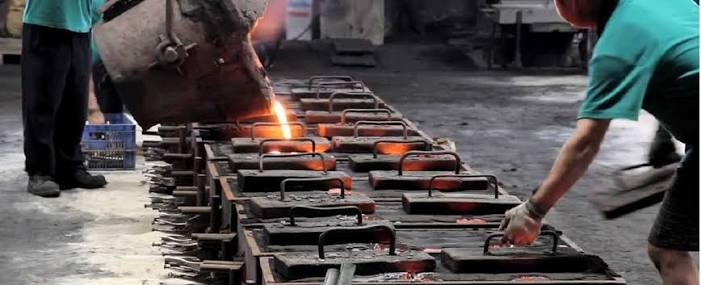
Iron castings play an important role in automotive manufacturing because they provide the strength, durability, and design flexibility required for many vehicle components. From engine blocks and brake systems to transmission housings and suspension parts, cast iron components are used in passenger cars, commercial vehicles, agricultural machinery, and heavy-duty transportation equipment.
Automotive manufacturers select casting materials according to the mechanical demands, operating conditions, and production requirements of each component. Gray iron and ductile iron are particularly useful because they offer different combinations of wear resistance, vibration damping, machinability, and strength. An experienced Iron Castings Manufacturer helps produce components that meet automotive engineering specifications through controlled material selection, casting processes, machining, and quality inspection.
1. Engine Blocks and Cylinder Components
<AsyncImage query=”automotive cast iron engine block cylinder block manufacturing foundry” aspectRatio=”16:9″ width=”100%”/>
Engine blocks are among the well-known applications of iron casting in the automotive industry. They form the main structure that supports important engine components, including cylinders, crankshaft assemblies, and other internal mechanisms.
Cast iron has traditionally been used for engine blocks because of its strength, wear resistance, and ability to reduce vibration. Gray iron is particularly valued for its machinability and damping characteristics.
The casting process also allows manufacturers to create complex internal passages for coolant and lubrication systems. These features can be integrated into the component design, reducing the need for separate parts.
Although aluminum alloys are widely used in modern engine designs to reduce vehicle weight, cast iron remains relevant in applications where durability, stiffness, and wear resistance are important.
2. Brake Discs and Brake Drums
<AsyncImage query=”automotive gray cast iron brake discs rotors and brake drums industrial production” aspectRatio=”16:9″ width=”100%”/>
Braking systems generate considerable heat and friction during vehicle operation. Cast iron is commonly used for brake discs and drums because it offers useful thermal properties, wear resistance, and manufacturing flexibility.
Gray cast iron is particularly suitable for many conventional brake applications. Its graphite structure helps provide vibration damping and contributes to friction-related performance.
Casting allows brake components to be manufactured in different sizes and configurations for passenger cars, trucks, and commercial vehicles.
Manufacturers must carefully control material composition, cooling conditions, and machining accuracy to ensure that finished brake components meet the required specifications.
3. Transmission and Gearbox Housings
Transmission housings protect and support internal gears, shafts, bearings, and lubrication systems. These components require sufficient structural strength and accurate dimensions to maintain proper alignment.
Iron casting provides a practical way to manufacture housings with complex external shapes and internal cavities.
Gray iron may be selected for applications where stiffness, vibration damping, and machinability are important. Ductile iron can be considered when higher mechanical strength and toughness are required.
After casting, critical mounting surfaces, bearing locations, and connection points are often machined to achieve the necessary dimensional accuracy.
4. Cylinder Heads and Related Engine Parts
Cylinder heads form an important part of internal combustion engines. They contain features associated with combustion chambers, valve assemblies, and coolant passages.
Cast iron has been used in cylinder head production because of its strength, thermal characteristics, and ability to withstand demanding operating conditions.
The manufacturing process must account for complex internal geometry and variations in wall thickness. Proper mold and core design helps create the required passages and cavities.
Depending on the engine design, aluminum alloys may also be preferred because of their lower weight and heat-transfer characteristics. Material selection therefore depends on the specific performance and manufacturing requirements.
5. Crankshaft and Supporting Components
Crankshafts convert the reciprocating movement of engine pistons into rotational motion. They operate under repeated mechanical loading, making strength and fatigue performance important considerations.
Certain crankshaft designs are manufactured using ductile iron because its nodular graphite structure provides a useful combination of strength and toughness.
Casting can produce complex crankshaft geometries, including counterweights and connecting features. Additional machining and finishing operations are then used to achieve the required journal dimensions and surface quality.
The suitability of cast iron depends on engine design, load conditions, and performance requirements. Forged steel is another common option for applications requiring different mechanical characteristics.
6. Suspension and Steering Components
Suspension systems support vehicle weight and help maintain stability while driving over different road surfaces. Some suspension and steering components are manufactured from ductile iron because of its mechanical strength and ability to handle repeated loading.
Examples of cast iron components may include:
- Steering knuckles.
- Suspension brackets.
- Mounting supports.
- Selected control arm components.
- Structural connection parts.
Ductile iron can be useful for parts that require a balance of strength, toughness, and design flexibility.
The casting design must account for stress concentration, wall thickness, and the component’s connection points. Inspection and testing are important to verify that the finished parts meet the required engineering specifications.
7. Differential and Axle Housings
Differential assemblies distribute engine power to the vehicle’s driving wheels while allowing them to rotate at different speeds. Their housings must protect internal gears and support the mechanical loads generated during operation.
Iron castings are used in certain differential and axle housing designs because they can provide suitable structural properties and complex geometries.
Manufacturers can integrate mounting features, bearing supports, and other structural details into the casting design.
Ductile iron may be selected when higher strength and toughness are needed, while other materials may be used depending on vehicle weight, performance, and production requirements.
8. Exhaust System Components
Some automotive exhaust system components operate under high temperatures and repeated thermal cycles. Cast iron has historically been used for exhaust manifolds because certain grades offer suitable heat resistance and structural stability.
An exhaust manifold collects exhaust gases from the engine cylinders and directs them toward the exhaust system.
Casting is useful for manufacturing manifolds with multiple passages and integrated connection features. The design must account for thermal expansion, wall thickness, and gas flow requirements.
Material selection is particularly important because components experience repeated heating and cooling during vehicle operation.
9. Automotive Pump and Fluid System Housings
Vehicles contain several systems that rely on fluid circulation, including engine cooling, lubrication, and hydraulic applications. Certain pump bodies and housings can be manufactured using cast iron.
Casting allows manufacturers to create internal passages, mounting features, and structural shapes within a single component.
These parts may require accurate machined surfaces to ensure proper sealing and assembly. Depending on the application, gray iron or ductile iron may be considered.
Quality control is important because dimensional errors or casting defects can affect fluid movement, sealing performance, and component reliability.
10. Why Automotive Manufacturers Use Cast Iron
Despite the growing use of lightweight materials, cast iron remains valuable in automotive manufacturing because of its combination of mechanical and production characteristics.
Several advantages explain its continued use.
Strength and durability: Suitable iron grades provide the mechanical properties needed for many structural and functional automotive components.
Wear resistance: Certain cast iron grades perform well in applications involving repeated contact and friction.
Vibration damping: Gray iron can absorb vibrations, making it useful for selected engine and machinery components.
Complex shapes: Casting allows manufacturers to produce parts with integrated features and internal cavities.
Machinability: Many gray iron grades can be machined efficiently using suitable cutting tools and processes.
Production flexibility: Foundries can manufacture components in different sizes and quantities depending on tooling and process capabilities.
These characteristics make cast iron a practical material for applications where its weight and properties are appropriate.
11. How Iron Casting Manufacturing Supports Automotive Quality
Automotive components must meet defined engineering specifications because their performance can influence vehicle safety, efficiency, and reliability.
The manufacturing process involves several controlled stages, from material selection and mold preparation to casting, machining, and inspection.
Important quality control activities include:
- Chemical composition testing.
- Dimensional measurement.
- Hardness testing.
- Tensile testing where specified.
- Visual inspection.
- Metallographic examination.
- Non-destructive testing when required.
Manufacturers may also use casting simulation to evaluate metal flow and solidification before production. This helps identify potential problems and improve mold design.
Consistent quality management is particularly important for components produced in repeated batches.
12. The Role of Precision Machining in Automotive Castings
<AsyncImage query=”automotive cast iron component precision CNC machining production line” aspectRatio=”16:9″ width=”100%”/>
Casting creates the basic shape of an automotive component, but many parts require additional machining before assembly.
CNC milling, turning, drilling, and boring are used to produce accurate holes, bearing surfaces, mounting points, and sealing areas.
Precision machining is important for components such as engine blocks, transmission housings, brake parts, and pump bodies.
Manufacturers must consider machining allowances during the original casting design. This ensures that sufficient material remains for achieving the required final dimensions.
Combining accurate casting with controlled machining helps improve component compatibility and assembly consistency.
13. Iron Castings in Electric and Hybrid Vehicles
The development of electric and hybrid vehicles is changing automotive component requirements. Although these vehicles use different powertrain systems from conventional internal combustion vehicles, cast iron still has applications in certain areas.
For example, cast iron brake discs remain relevant in many electric and hybrid vehicles. Selected structural and mechanical components may also use cast iron when its properties suit the application.
However, vehicle manufacturers are placing greater emphasis on weight reduction to improve driving range and energy efficiency. Aluminum alloys and other lightweight materials are therefore increasingly used in some applications where cast iron was traditionally common.
The future role of iron casting will depend on how manufacturers balance material performance, vehicle weight, production cost, and durability.
Conclusion
Iron castings remain an important part of automotive manufacturing, supporting the production of engine components, brake systems, transmission housings, suspension parts, and other mechanical assemblies. Their strength, wear resistance, vibration damping, machinability, and design flexibility make them suitable for a wide range of vehicle applications.
As automotive technology continues to develop, manufacturers will need to select materials and casting processes according to changing performance and efficiency requirements. Through accurate engineering, controlled production, precision machining, and reliable inspection, iron casting continues to provide practical solutions for many automotive components.




Post Comment