How to Choose the Right Home Circuit Breaker for Residential Electrical Safety
A safe and reliable electrical system is essential for every home. From lighting and kitchen appliances to air conditioners and water heaters, residential electrical circuits handle a wide range of loads every day. Without suitable protective devices, problems such as overloaded circuits, short circuits, and electrical faults can damage equipment, overheat wiring, and increase the risk of fire. Choosing appropriate circuit protection is therefore an important part of residential electrical planning.
Selecting the right Home Circuit Breaker helps protect household wiring and connected equipment by automatically disconnecting power when specified fault conditions occur. However, not all circuit breakers serve the same purpose. Their ratings, tripping characteristics, breaking capacities, and protection functions must match the requirements of the electrical installation. Understanding these factors can help homeowners and electricians make informed decisions about residential electrical safety.
What Is a Home Circuit Breaker?
A home circuit breaker is an automatically operated electrical switching device designed to protect residential circuits from specific electrical faults. When a fault exceeds the device’s operating limits, the breaker interrupts the current flow to help prevent damage.
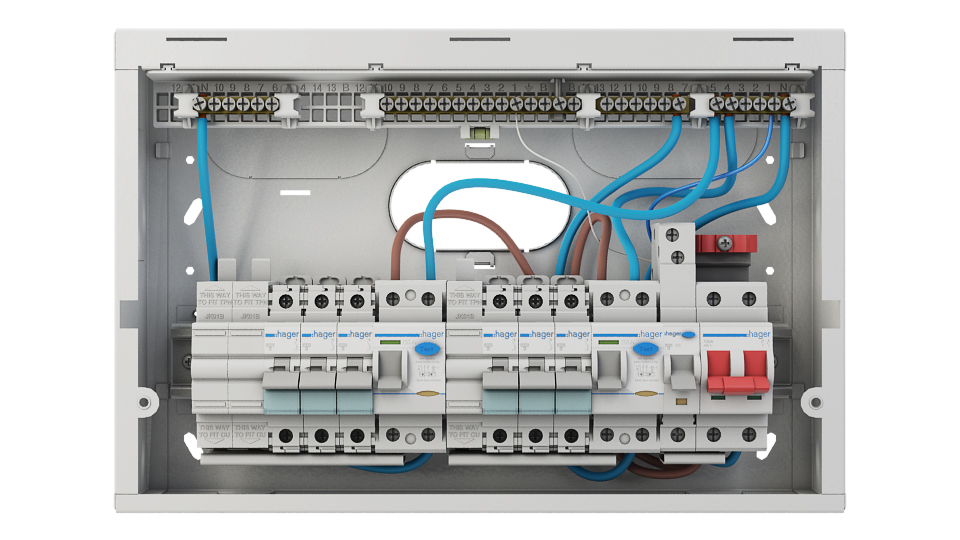
Most residential distribution boards contain several protective devices, each assigned to a particular circuit or group of circuits.
Common circuit breaker types include:
- Miniature Circuit Breakers (MCBs): Protect against overloads and short circuits.
- Residual Current Circuit Breakers (RCCBs): Detect residual-current leakage and help reduce certain electric shock risks.
- Residual Current Breakers with Overcurrent Protection (RCBOs): Combine residual-current and overcurrent protection.
- Main circuit breakers: Provide switching and overcurrent protection for an entire installation or distribution section, depending on their design.
Each device performs a different function, so selecting the right combination is essential.
Why Choosing the Correct Circuit Breaker Matters
The correct circuit breaker does more than disconnect electricity when a fault occurs. It helps ensure that the electrical installation operates within safe limits.
Protection Against Electrical Overloads
An overload occurs when a circuit carries more current than its conductors are designed to handle. This may happen when several high-power appliances operate simultaneously on the same circuit.
Excessive current generates heat in electrical cables. If the condition continues, insulation can deteriorate and create a fire hazard.
A suitably rated MCB detects sustained overcurrent through its thermal tripping mechanism and disconnects the circuit.
Protection Against Short Circuits
A short circuit occurs when conductors with different electrical potentials come into unintended contact. This can produce a sudden increase in current.
Circuit breakers use electromagnetic tripping mechanisms to respond rapidly to high fault currents. The device must have an adequate breaking capacity to interrupt the prospective short-circuit current safely.
Additional Protection Against Electric Shock
Overcurrent protection alone cannot address every electrical hazard. Current leakage caused by damaged insulation or faulty appliances may create a risk of electric shock without producing enough current to trip a conventional MCB.
RCCBs and RCBOs provide residual-current protection by detecting an imbalance between outgoing and returning current.
Different Types of Circuit Breakers Used in Homes
Understanding the main categories of residential protective devices makes it easier to choose a suitable electrical protection arrangement.
1. Miniature Circuit Breaker (MCB)
<AsyncImage query=”miniature circuit breaker MCB modular electrical distribution board close up” aspectRatio=”16:9″ width=”100%”/>
MCBs are commonly used to protect individual residential circuits against overloads and short circuits.
They are available in different current ratings, pole configurations, and tripping characteristics. Separate MCBs may be installed for lighting, socket outlets, kitchen equipment, and dedicated appliance circuits.
2. Residual Current Circuit Breaker (RCCB)
<AsyncImage query=”RCCB residual current circuit breaker electrical protection device close up” aspectRatio=”16:9″ width=”100%”/>
An RCCB detects residual-current leakage by comparing the current flowing through live and neutral conductors.
When the imbalance reaches its specified operating threshold, the device disconnects the circuit. It does not normally provide overload or short-circuit protection, so suitable overcurrent protection must also be installed.
3. Residual Current Breaker with Overcurrent Protection (RCBO)
<AsyncImage query=”RCBO residual current overcurrent protection circuit breaker modular electrical panel” aspectRatio=”16:9″ width=”100%”/>
An RCBO combines the functions of an MCB and an RCCB in one device. It provides protection against overloads, short circuits, and specified residual-current faults.
This arrangement can be useful when individual circuit protection is required within a compact distribution board.
4. Main Circuit Breaker
The main breaker controls and protects an electrical supply or distribution section according to its design and rating. It provides a central switching point for disconnecting power during maintenance or emergencies.
Its specifications must match the electrical supply, service arrangement, and installation requirements.
Important Factors When Choosing a Home Circuit Breaker
Selecting a suitable breaker requires careful consideration of the electrical circuit and the connected equipment.
1. Rated Current
Rated current is one of the most important selection factors. It indicates the current the breaker is designed to carry under specified conditions.
The selected rating must be coordinated with the circuit’s expected load and the current-carrying capacity of its cables.
For example, lighting circuits generally have different load requirements from dedicated circuits supplying electric ovens or air conditioners. A qualified electrician should calculate the appropriate rating rather than selecting a breaker based only on appliance wattage.
2. Breaking Capacity
Breaking capacity indicates the maximum fault current a circuit breaker is designed to interrupt safely under specified conditions.
The device must have a sufficient breaking capacity for the prospective short-circuit current at its installation point. Choosing an inadequate rating can compromise fault interruption and electrical safety.
3. Tripping Characteristics
MCBs commonly use different tripping characteristics to accommodate different electrical loads.
| MCB type | Typical magnetic tripping range | Common applications |
|---|---|---|
| Type B | 3–5 times rated current | Residential lighting and general resistive loads |
| Type C | 5–10 times rated current | Equipment with moderate starting or inrush current |
| Type D | 10–20 times rated current | Certain motors and equipment with high starting currents |
The correct characteristic depends on the connected load, expected inrush current, and fault-loop conditions. It should be selected through proper electrical assessment.
4. Number of Poles
Circuit breakers are available in different pole configurations, including single-pole, double-pole, three-pole, and four-pole designs.
The appropriate configuration depends on the supply arrangement and whether one or multiple conductors need to be switched or protected.
5. Residual-Current Sensitivity
When selecting an RCCB or RCBO, consider its rated residual operating current.
A 30 mA device is commonly used for additional protection against electric shock in applications where required by local electrical regulations. Other ratings may be suitable for different protection purposes.
6. Device Compatibility
The selected breaker must be compatible with the distribution board, mounting arrangement, busbar system, voltage rating, and manufacturer’s specifications.
Using an incompatible protective device can create installation problems and compromise safety.
Choosing Circuit Breakers for Different Household Circuits
Different areas of a home have different electrical requirements. Circuit protection should reflect the load characteristics and the risks associated with each application.
Lighting Circuits
Lighting circuits generally supply lower-power loads than dedicated appliance circuits. Their breaker rating should be selected according to the cable size, installation method, and expected current.
Socket Outlet Circuits
Socket outlets may supply several appliances with different power requirements. Their protection should account for the expected demand and the wiring arrangement.
Residual-current protection may also be required to reduce electric shock risks.
Kitchen Appliances
Kitchens often contain high-power appliances such as ovens, microwaves, dishwashers, and refrigerators.
Some appliances require dedicated circuits with appropriately rated breakers. The appliance manufacturer’s instructions and electrical design should guide selection.
Air Conditioners
Air-conditioning equipment can draw significant starting current, particularly when compressors or motors operate.
The breaker must be suitable for the equipment’s rated current, starting characteristics, and manufacturer’s recommendations.
Water Heaters
Electric water heaters generally require suitable dedicated circuit protection based on their power consumption and wiring requirements. Because these appliances may operate in moisture-prone environments, appropriate residual-current protection is also an important consideration.
Common Mistakes to Avoid When Selecting a Home Circuit Breaker
Incorrect breaker selection can reduce the effectiveness of an otherwise well-designed electrical installation.
Choosing an oversized breaker: A breaker with an excessive current rating may fail to provide adequate protection for the connected cables.
Ignoring breaking capacity: The device must be capable of interrupting the expected fault current safely.
Using an MCB as the only protection: An MCB does not normally detect low-level residual-current leakage. Additional protection may be necessary.
Selecting the wrong tripping characteristic: An unsuitable characteristic may cause unnecessary tripping or fail to provide appropriate protection under expected fault conditions.
Ignoring manufacturer instructions: Protective devices should always be installed according to their technical specifications and approved wiring arrangements.
Resetting a repeatedly tripping breaker: Repeated tripping may indicate an overload, short circuit, or equipment fault. The cause must be investigated before the circuit is returned to service.
Installation and Maintenance Best Practices
Even a correctly selected circuit breaker cannot provide dependable protection if it is installed or maintained improperly.
The following practices help maintain residential electrical safety:
- Hire a qualified electrician: Electrical installation and modification should be performed by competent professionals.
- Check cable sizing: Ensure that conductor capacity is appropriate for the protective device and circuit load.
- Verify terminal connections: Loose connections can cause overheating and electrical failure.
- Label each circuit: Clear distribution board labels make fault identification and maintenance easier.
- Test residual-current devices: Use the test button according to manufacturer instructions and applicable local guidance.
- Inspect the distribution board: Look for discoloration, unusual smells, physical damage, or signs of overheating.
- Investigate recurring faults: Never ignore frequent breaker operation or repeatedly reset a device without identifying the problem.
Regular professional inspection is especially important in older homes, where wiring and electrical equipment may have deteriorated over time.
How to Improve Overall Residential Electrical Safety
Circuit breakers are only one part of a complete electrical safety strategy. A reliable installation also depends on proper earthing, suitable cable insulation, correct wiring practices, and appropriate protective coordination.
Homeowners can improve safety by avoiding overloaded extension leads, replacing damaged electrical cords, using appliances according to manufacturer instructions, and keeping electrical equipment away from unnecessary moisture.
It is also important to ensure that distribution boards contain suitable protective devices for each circuit. MCBs, RCCBs, and RCBOs can work together to address different electrical hazards.
Electrical systems should be designed according to applicable national wiring regulations and inspected by qualified professionals.
Conclusion
Choosing the right home circuit breaker is essential for protecting residential wiring, appliances, and occupants from electrical hazards. MCBs provide protection against overloads and short circuits, while RCCBs and RCBOs offer additional protection against specified residual-current faults.
The most suitable device depends on factors such as rated current, breaking capacity, tripping characteristics, pole configuration, and the electrical requirements of the connected equipment. Proper installation, regular testing, and professional maintenance are equally important.
By selecting compatible protective devices and following established electrical safety practices, homeowners can create a more reliable electrical system that supports everyday comfort while reducing the risks associated with electrical faults.






Post Comment