China Wash Basin Manufacturers: A Complete Buyer’s Guide

Wash basins are among the most frequently used fixtures in residential and commercial bathrooms. For international buyers, sourcing from China can provide access to a broad range of designs, materials, sizes, and manufacturing options for projects of different scales.
When evaluating China Wash Basin Manufacturers, buyers should consider more than product appearance and unit price. Material quality, manufacturing processes, customization capabilities, quality control, certifications, packaging, and export experience can all affect the final purchasing decision.
Why Source Wash Basins from China?
China has a well-established manufacturing industry serving both domestic and international bathroom markets. Manufacturers produce standard wash basins as well as customized products for hotels, residential developments, commercial buildings, retailers, and bathroom brands.
The country’s extensive supply chain can also make it possible to source different bathroom products from related manufacturers, potentially simplifying procurement for larger projects.
Common Types of Wash Basins
Before contacting manufacturers, buyers should identify the type of basin required. Different installation methods serve different bathroom layouts and design requirements.
Countertop Wash Basins
Countertop basins sit on top of a vanity or countertop and are widely used in contemporary bathroom designs. They are available in different shapes, dimensions, colors, and materials.
Their visible design makes surface quality and dimensional consistency particularly important.
Undermount Basins
Undermount basins are installed beneath the countertop surface, creating a clean transition between the basin and surrounding worktop.
Accurate dimensions are essential because the basin must fit the countertop opening and installation system correctly.
Wall-Mounted Basins
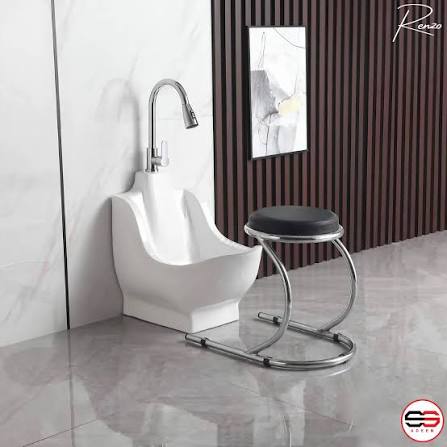
Wall-mounted wash basins attach directly to the wall and can be useful where floor space is limited. They are often considered for compact residential bathrooms, public facilities, and commercial environments.
The mounting system and wall structure should be evaluated to ensure suitable installation and support.
Integrated Basins
Integrated basins combine the basin and countertop into a single design. Depending on the material and manufacturing process, this configuration can reduce visible joints and create a seamless appearance.
Integrated products may require more precise customization, particularly when dimensions must match specific vanity units or architectural layouts.
Materials Used for Wash Basins
Material selection affects appearance, durability, maintenance, weight, and cost.
Ceramic
Ceramic is a common choice for traditional and contemporary wash basins. It can provide a smooth, easy-to-clean surface and is available in many shapes and sizes.
Buyers should assess glazing quality, dimensional accuracy, surface consistency, and manufacturing standards.
Solid Surface
Solid surface materials allow manufacturers to create modern shapes and integrated designs. They are commonly used for countertops and contemporary basin applications.
When evaluating solid surface products, buyers should examine material composition, density, surface finish, stain resistance, and repair characteristics.
Glass and Other Materials
Glass basins can provide a distinctive appearance and are available in various colors and forms. Stainless steel and composite materials are also used for specific applications.
The choice should be based on the intended environment, maintenance requirements, design objectives, and expected usage.
What to Check When Evaluating a Manufacturer
Choosing a suitable factory requires a broader assessment than comparing product catalogs.
Production Capability
Ask about manufacturing facilities, equipment, production capacity, and experience with the specific basin type required.
For large projects, confirm that the manufacturer can maintain production volume without compromising quality or delivery schedules.
Quality Control
Ask how raw materials, dimensions, surface finishes, and finished products are inspected.
For significant orders, buyers can consider third-party inspections before shipment. Clear acceptance criteria should be agreed upon before production begins.
Customization Capability
If the project requires non-standard dimensions, colors, shapes, or integrated designs, confirm that the manufacturer has relevant technical experience.
Customization may involve additional tooling, sampling, minimum order quantities, and development time.
Understanding Minimum Order Quantities
Minimum order quantities can vary considerably between manufacturers and product types. Standard products may be available in smaller quantities, while customized basins can require larger commitments.
Buyers should ask about minimum order quantities before requesting detailed development work. This helps determine whether a supplier is suitable for the project’s purchasing volume.
Request Samples Before Ordering
A physical sample can reveal details that photographs and product descriptions cannot show. Buyers should examine the surface, dimensions, finish, construction, color, and overall workmanship.
For customized products, the approved sample should be documented and used as a reference during mass production. Any changes should be reviewed and approved before the factory continues production.
Certifications and Market Requirements
Wash basin requirements vary according to the destination market and intended application. Some projects may have specific standards covering materials, water use, installation, or product safety.
International buyers should identify applicable requirements before placing an order and request supporting documentation from the manufacturer.
Certification documents should be checked carefully to ensure they relate to the actual products being purchased.
Packaging and International Shipping
Wash basins can be susceptible to impact and surface damage during transportation. Packaging should therefore be considered part of the purchasing decision.
Ask manufacturers about carton specifications, protective materials, internal supports, palletization, and container loading procedures. For large orders, buyers may also consider testing packaging before mass shipment.
Comparing Supplier Quotations
A quotation should be evaluated according to the complete specification rather than unit price alone.
Consider:
- Basin material and construction
- Dimensions and design
- Surface finish
- Customization requirements
- Packaging
- Tooling costs
- Minimum order quantity
- Production lead time
- Inspection costs
- Shipping terms
Comparing suppliers on identical specifications provides a more meaningful assessment of overall value.
Common Mistakes Buyers Should Avoid
International buyers can reduce sourcing risks by avoiding several common mistakes.
Ordering large quantities before reviewing samples can make quality problems expensive to correct. Choosing a supplier solely because of the lowest quotation can also result in unexpected costs later.
Other mistakes include failing to confirm dimensions, overlooking destination-market requirements, using unclear product specifications, and not establishing an inspection process before production.
Questions to Ask Before Choosing a Supplier
Before finalizing a manufacturer, buyers can ask:
- What types of wash basins does the factory specialize in?
- Which materials are available?
- What are the standard and customized dimensions?
- What is the minimum order quantity?
- Can the manufacturer provide samples?
- What customization options are available?
- What quality-control procedures are used?
- Which certifications or test reports can be provided?
- What packaging is recommended for international shipping?
- What are the production and delivery lead times?
The answers can help buyers compare manufacturers using practical criteria rather than relying on marketing claims.
Final Buyer Considerations
Selecting a wash basin manufacturer is a balance between product requirements, quality, cost, capacity, and reliability. The right supplier should be able to produce products that meet the project’s specifications consistently while supporting the buyer’s required schedule and market requirements.
A careful sourcing process should include supplier research, sample evaluation, specification confirmation, quotation comparison, quality inspection, and delivery planning. Taking these steps can help international buyers make more informed decisions when sourcing wash basins from China.



Post Comment