How to Choose Industrial Control Relays for CNC and Packaging Machines?
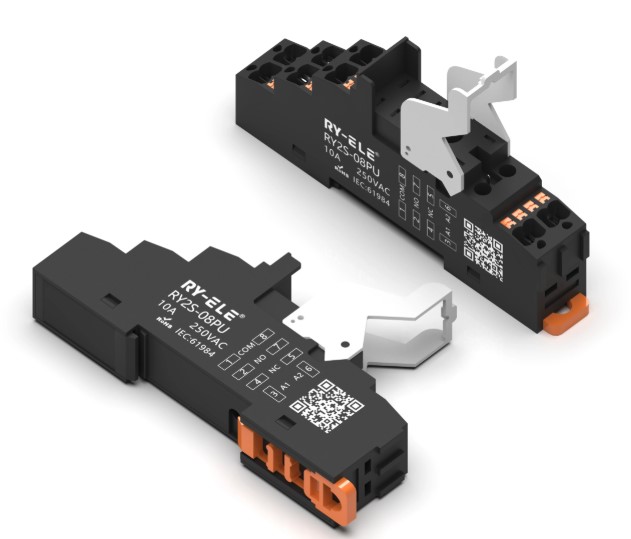
CNC and packaging machines depend on coordinated electrical control to perform precise, repeatable operations. These systems often combine controllers, sensors, motors, valves, actuators, and indicators that must respond to commands at the right time.
Selecting suitable industrial control relays helps engineers manage these switching functions while maintaining an organized control architecture. The right relay should match the machine’s electrical requirements, switching frequency, available space, and operating environment rather than simply focusing on its physical size or price.
Understand the Machine’s Control Requirements
The first step involves identifying what the relay needs to control. CNC and packaging equipment may contain several circuits with different voltage, current, and switching requirements.
Create a clear list of the devices connected to the relay outputs. This may include solenoid valves, contactors, signal lamps, cooling systems, clamps, conveyors, or auxiliary motors.
Understanding the complete circuit helps engineers choose relay specifications that fit the actual application.
Selecting Relays for CNC Machines
CNC equipment requires accurate coordination between mechanical movements and electrical control functions. Relays can support auxiliary operations that work alongside the machine’s primary controller.
For example, a relay may control coolant equipment, lubrication systems, pneumatic valves, workholding devices, warning indicators, or other auxiliary functions.
Check Switching Frequency
Some CNC machines operate through repeated production cycles. Components that switch frequently require appropriate electrical and mechanical endurance.
Review the expected number of switching operations and compare it with the relay’s rated endurance. This step helps reduce premature contact wear.
Consider Electrical Noise
CNC environments may contain motors, drives, contactors, and other equipment that generate electrical interference. Engineers should consider the relay’s insulation characteristics and the overall control cabinet design.
Proper wiring, grounding, separation, and circuit protection also contribute to dependable operation.
Choosing Relays for Packaging Machines
Packaging machinery often performs fast, repetitive sequences. Filling, sealing, labeling, cutting, counting, and conveying functions may require multiple electrical switching operations.
A suitable relay should support the required switching frequency while handling the connected load within its rated specifications.
Match the Relay to the Load
Packaging machines commonly use solenoids, sensors, contactors, valves, and indicators. Each device can place different demands on relay contacts.
Check the voltage, current, and load type before selecting the relay. Inductive loads require particular attention because switching them may produce electrical transients.
Consider Cycle Requirements
A packaging machine may run continuously during production periods. Frequent switching places greater demands on relay contacts than occasional operation.
Compare the expected machine cycles with the relay’s electrical and mechanical endurance. This comparison provides a more useful basis for selection than relying on general-purpose specifications.
Pay Attention to Coil Voltage
The relay coil must match the control circuit that activates it. Common industrial systems use different AC and DC control voltages, so engineers should verify the available supply before choosing a component.
Coil power also deserves consideration when a panel contains many relays. Multiple energized coils can increase the control system’s overall power consumption and contribute to heat inside the enclosure.
Selecting a relay with suitable coil characteristics supports efficient integration with the machine’s controller.
Select the Correct Contact Configuration
Contact configuration determines how the controlled circuit behaves when the relay coil energizes or de-energizes.
Normally open contacts close when the relay activates, while normally closed contacts open. Changeover contacts provide switching between separate circuit paths when the application requires that function.
The correct configuration depends on the machine’s sequence and the desired state of each connected device.
Consider Mounting and Panel Space
CNC and packaging control cabinets often contain many components. Relay dimensions therefore matter when engineers plan the panel layout.
DIN rail-compatible designs can simplify installation and help maintain an organized arrangement of control components. Terminal accessibility also matters because technicians need sufficient access for wiring, testing, and maintenance.
A compact relay can save valuable panel space, but physical dimensions should always remain secondary to electrical and environmental requirements.
Evaluate Operating Temperature
Heat can affect electrical components, particularly inside densely populated control cabinets. CNC machines and packaging systems may also operate for extended periods, making thermal conditions important during component selection.
Check the relay’s specified operating temperature range and consider the cabinet’s ventilation or cooling arrangement.
The relay should remain within its recommended operating conditions during normal machine operation.
Review Protection and Reliability Requirements
Reliable relay operation depends on more than the relay itself. The surrounding circuit should provide appropriate protection and follow sound electrical design practices.
For applications involving inductive loads, suitable suppression methods may help reduce voltage transients and contact stress. Engineers should follow the relay manufacturer’s recommendations when selecting protection components.
RY-ELE provides relay solutions for industrial control and automation applications. Manufacturers can evaluate its products according to the specific electrical and mechanical requirements of their CNC or packaging equipment.
Build a Practical Selection Checklist
Before approving a relay for production equipment, engineers can review the following points:
- Control coil voltage
- Contact voltage and current
- Load type
- Contact configuration
- Switching frequency
- Electrical endurance
- Mechanical endurance
- Operating temperature
- Mounting method
- Available panel space
- Insulation and protection requirements
This checklist helps prevent common selection errors and provides a consistent approach across different machine designs.
CNC and Packaging Relay Selection Compared
Although CNC and packaging machines share many control principles, their operating demands may differ.
CNC equipment often emphasizes precise coordination, auxiliary control functions, and compatibility with sophisticated machine-control systems. Packaging machinery may place greater emphasis on rapid repetitive switching and high production-cycle counts.
Engineers should therefore select relays according to the actual application rather than assuming that one relay specification suits every automated machine.
Why the Right Relay Matters
A relay serves as a small component within a much larger automation system, yet its performance can influence the reliability of connected control functions. An unsuitable relay may experience excessive contact wear, overheating, or other operating problems.
A carefully selected component supports stable switching and makes the control system easier to maintain. It also helps engineers create a more predictable electrical design.
Final Thoughts
Choosing a relay for CNC or packaging machinery requires a complete view of the application. Engineers should examine the load, coil voltage, contact arrangement, switching frequency, endurance, temperature, mounting requirements, and available cabinet space.
The best choice balances electrical performance with the practical demands of the machine. RY-ELE offers industrial relay solutions that manufacturers can consider when developing control systems for CNC equipment, packaging machinery, and other automated applications.





Post Comment